
The Virtues of Illiteracy
A man can only be said to know what he knows by heart

Anthropologists have generally taken language to be the chief characteristic which sets off human beings from other animal species.
ESSAY BY WILLIAM BRIGHT
There has been a strong tendency to take writing, or literacy, as the most important feature which distinguishes “advanced” or “civilized” societies from those which are often labeled as “primitive” or “savage.”
In his The Domestication of the Savage Mind, author Jack Goody showed differences among human societies are related to changes in communications, first with the introduction of hieroglyphic or logographic writing, then the invention of syllabaries and alphabets, and still later the printing press.
Finally, in our own day, it’s the development of communication by instantaneous, electronic, and computerized means.
Each of these steps meant larger numbers of people were involved in networks of communication; each step meant greater amounts of information would be stored for later retrieval; and each step increased the gap between the non-literate and the literate worlds. —Not in a simplistic and dichotomous manner, but in ways involving entire structures of intellectual activity, and of mentality as a whole.1
Goody thought the results of literacy haven’t always been desirable: “. . . Through a series of forced and binary choices, literacy established the victory of the overgeneralized schema.”
How paradoxical that so many anthropologists, linguists, and folklorists have seen the development of writing as associated with “advancement,” and yet they themselves have preferred to devote themselves to field work among non-literate peoples.2
My personal view is, I’ve liked people in non-literate societies better than people in my own society. I may be accused of romanticism, of nostalgia for the “noble savage”— yet when I have become acquainted with American Indian societies, or of tribal societies in South Asia— who were non-literate, or at least only one generation removed from illiteracy— I have envied their intellectual prowess, flexibility and openness, their benefit.
Other Western anthropologists had similar reactions. It is understandable a process of Darwinian selection might operate to produce individuals with mental capacities which favor survival. Such capacities would include a highly-developed memory as well as a capacity for effective adaptation to the vicissitudes of daily life.
I would like to argue for the positive values of illiteracy.
I want to suggest non-literate peoples have retained powers of memory of a magnitude hard for us who are “civilized” to comprehend— and the holding of knowledge in such memorized form implies a deeper form of knowledge than such held by us who only have “book-learning.”
The written word may be an obstacle which separates human beings from effective knowledge. In the confrontation between literate and non-literate societies, writing is often been used by literate groups as a tool of oppression and discrimination, and as a weapon to destroy the values of non-literate peoples.
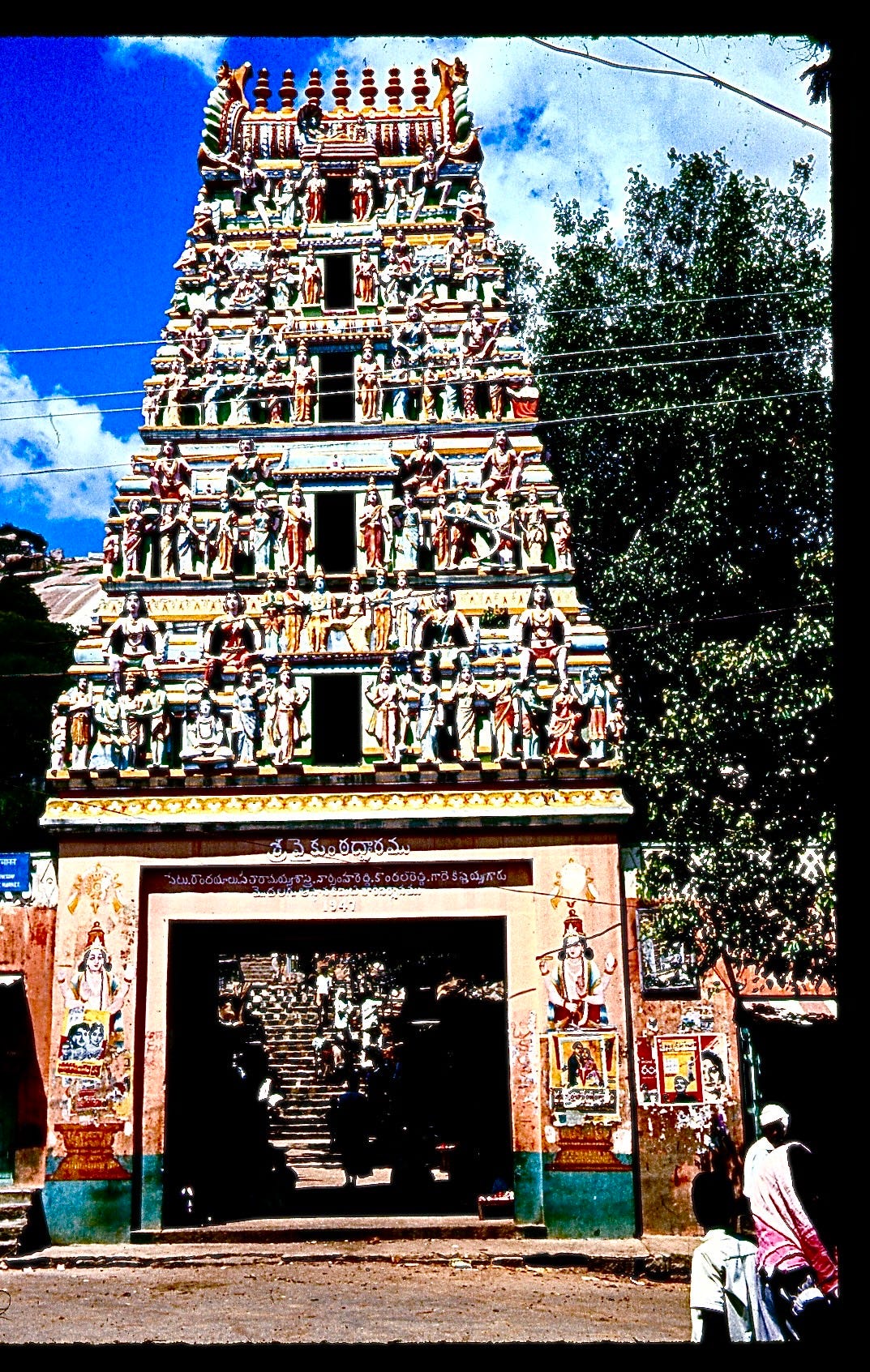
The Hindu tradition
The first scene which I wish to evoke is ancient India, on the power of memory and the importance of memorization.
On this question, Goody drew upon the epoch-making studies of oral epic in Ancient Greece and in Modern Yugoslavia3 which showed many oral literatures show constancy in over-all structure and in re-combinations of formulaic expressions, but not in word-for-word repetition.
It seems likely in the time when the Homeric epics were first sung, there was no single, fixed, or “correct” text; only the later introduction of writing led to the preparation of an “authorized version.”
However true this picture may be for some parts of the world, Ancient India gives us a different picture.
Thus, once the Vedic hymns had been orally composed (in strict meter), it was considered their religious effectiveness depended on their being transmitted without the slightest change, and elaborate methods of teaching and memorization— all without any knowledge or use of writing— were established to ensure this.
The process led to the entire development of linguistic analysis as a field of specialization among the ancient Hindu scholars, culminating in the celebrated grammar of Pāṇini and to the tradition which in turn derived from that work.
Here we have the very first invention of linguistics as a science— which, when Sanskrit was discovered by European scholars in the 18th and 19th centuries, was to contribute so much to the development of linguistics in the occidental world.
It appears Pānini was illiterate! The early Sanskrit linguistic compositions date from the 5th to the late 4th centuries B.C.; but our earliest evidence of written Sanskrit, using an alphabet introduced from the Near East, dates from the mid-3rd century B.C.4
We have reason to believe Pānini’s grammar, which not only described but standardized a language, was composed and initially transmitted without the use of writing, i.e., in the oral medium alone.
This belief is supported by the form of sūtras or rules used by Panini and other early Hindu scholars— for a wide range of arts and sciences— in which memorization was facilitated by extraordinary brevity. Thus the famous last sūtra of Panini is a a, the interpretation of which is:
‘The long low vowel [a:] has, as its short counterpart, the raised vowel [ə]’5
Not only sacred and scientific texts, but long literary works were composed and transmitted orally in Ancient India.
The most famous are the two major epics, the Mahabharata and the Ramayana, each many times longer than either the Iliad or the Odyssey, and each requiring days and nights for its recitation.
Even after writing was introduced to India, memorization of traditional texts has continued down to modern times. As the Ceylonese scholar Ananda Coomaraswamy noted:6
From the Indian point of view, a man can only be said to know what he knows by heart; what he must go to a book to be reminded of, he merely knows of.
There are hundreds of thousands of Indians today who still repeat, by heart, the whole or some large part of the Bhagavad Gita. Others more learned, can recite hundreds of thousands of longer texts. It was from a traveling village singer in Kashmir whom I first heard sing the Odes of the Persian poet, Rumi.
From the earliest times, Indians have thought of the learned man, not as one who has read much, but as one who has been profoundly taught.
For occidentals, who’ve relied for so long on writing, it is hard to recognize the capacities of the human memory.
What is said here of language, is as plainly said of music. Long musical compositions are composed and transmitted by memory, with little or no use of written notation.
Goody noted that much oral literature, e.g., in modern West Africa, is transmitted in variable form; yet there are reports such as those of Ruth Finnegan’s7 — also from modern West Africa — of extensive verbatim memorization.
In a very different context, Joel Sherzer8 reports “perfect repetition” is still practiced by the Guna Indians of Panama.
Yet for literate peoples, writing has come to be considered a necessity. To quote Coomaraswamy once more:9
“Necessities are not always goods in themselves, out of their context; some, like wooden legs, are advantageous only to men already maimed.”
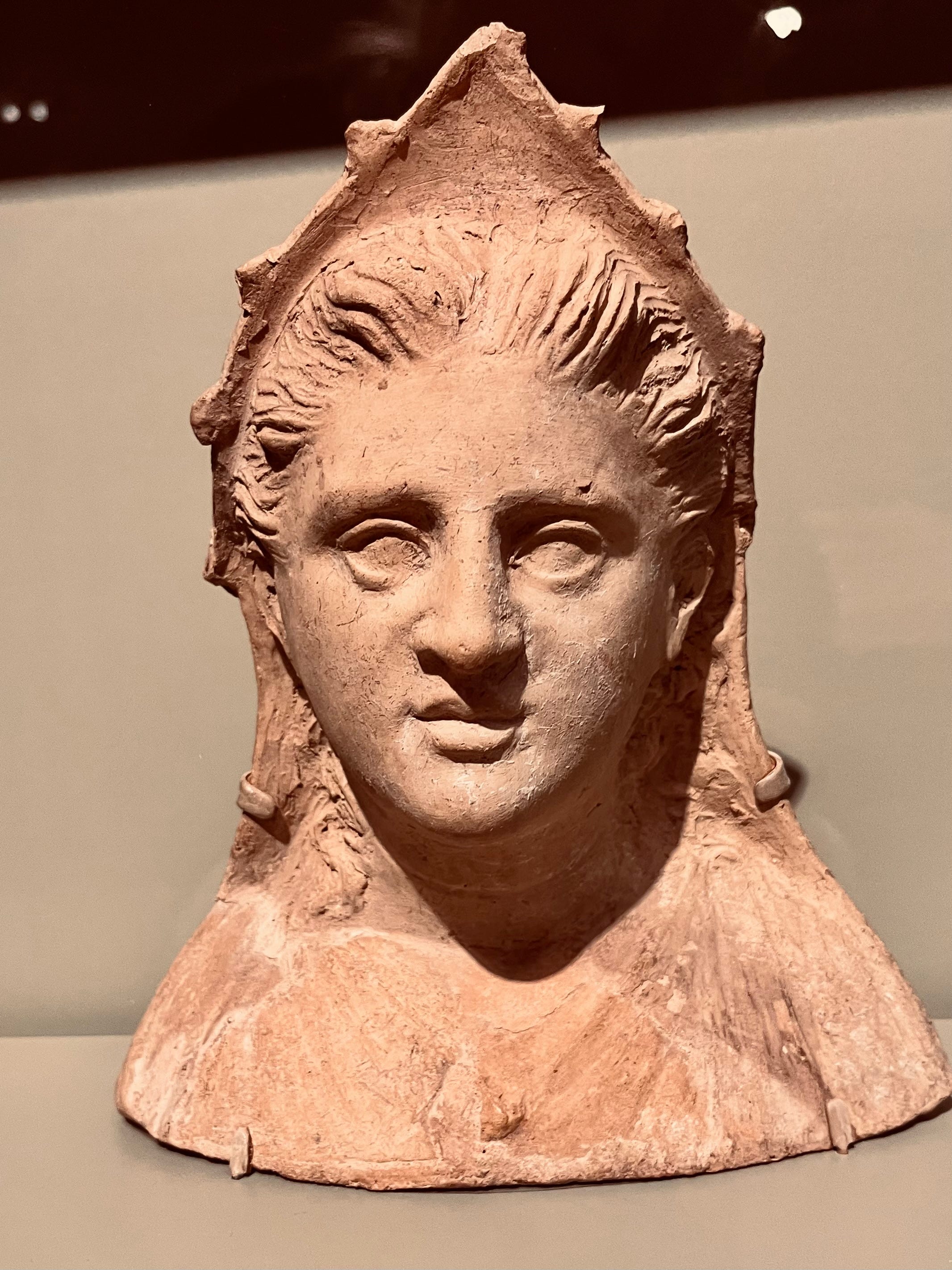
The warning of Socrates
Classicists are familiar with a passage in Plato’s Phaedrus in which Socrates warns his young friend Phaedrus against the dangers of the written word— in those days, relatively new to Greece.10
Socrates:
“At the Egyptian city of Naucratis, there was a famous old god, whose name was Theuth . . . he was the inventor of many arts . . . but his great discovery was the use of letters. Now in those days the god Thamus was the king of the whole country of Egypt . . . To him came Theuth and showed his inventions . . . and Thamus enquired about their several uses, and praised some of them . . . But when they came to letters, ‘This,” said Theuth, ‘will make the Egyptians wiser and give them better memories; it is a specific both for the memory and for the wit.’”
Thamus replied:
“O most ingenious Theuth, the parent or inventor of an art is not always the best judge of the utility or inutility of his own inventions to the users of them. And in this instance, you who are the father of letters, from a paternal love of your own children have been led to attribute to them a quality which they cannot have; for this discovery of yours will create forgetfulness in the learners’ souls, because they will not use their memories; they will trust to the external written characters and not remember of themselves.
“The specific which you have discovered is an aid not to memory, but to reminiscence, and you give your disciples not truth, but only the semblance of truth; they will be hearers of many things and will have learned nothing; they will appear to be omniscient and will generally know nothing; they will be tiresome company, having the show of wisdom without the reality . . .
“He would be a very simple person, who should leave in writing or receive in writing any art under the idea the written word would be intelligible or certain . . . I cannot help feeling, Phaedrus, that writing is like painting; for the creations of the painter have the attitude of life, and yet if you ask them a question they preserve a solemn silence . . .
“Is there not another kind of word or speech far better than this, and having far greater power— a son of the same family, but lawfully begotten? . . . I mean an intelligent word graven in the soul of the learner, which can defend itself, and knows when to speak and when to be silent.”
Phaedrus:
“You mean the living word of knowledge which has a soul, and of which the written word is properly no more than an image?”
Socrates:
“Yes, of course that is what I mean . . . even the best of writings are but a reminiscence of what we know . . .”
Even many centuries after Plato’s time, writing was for the Greeks and Romans something secondary to spoken language.
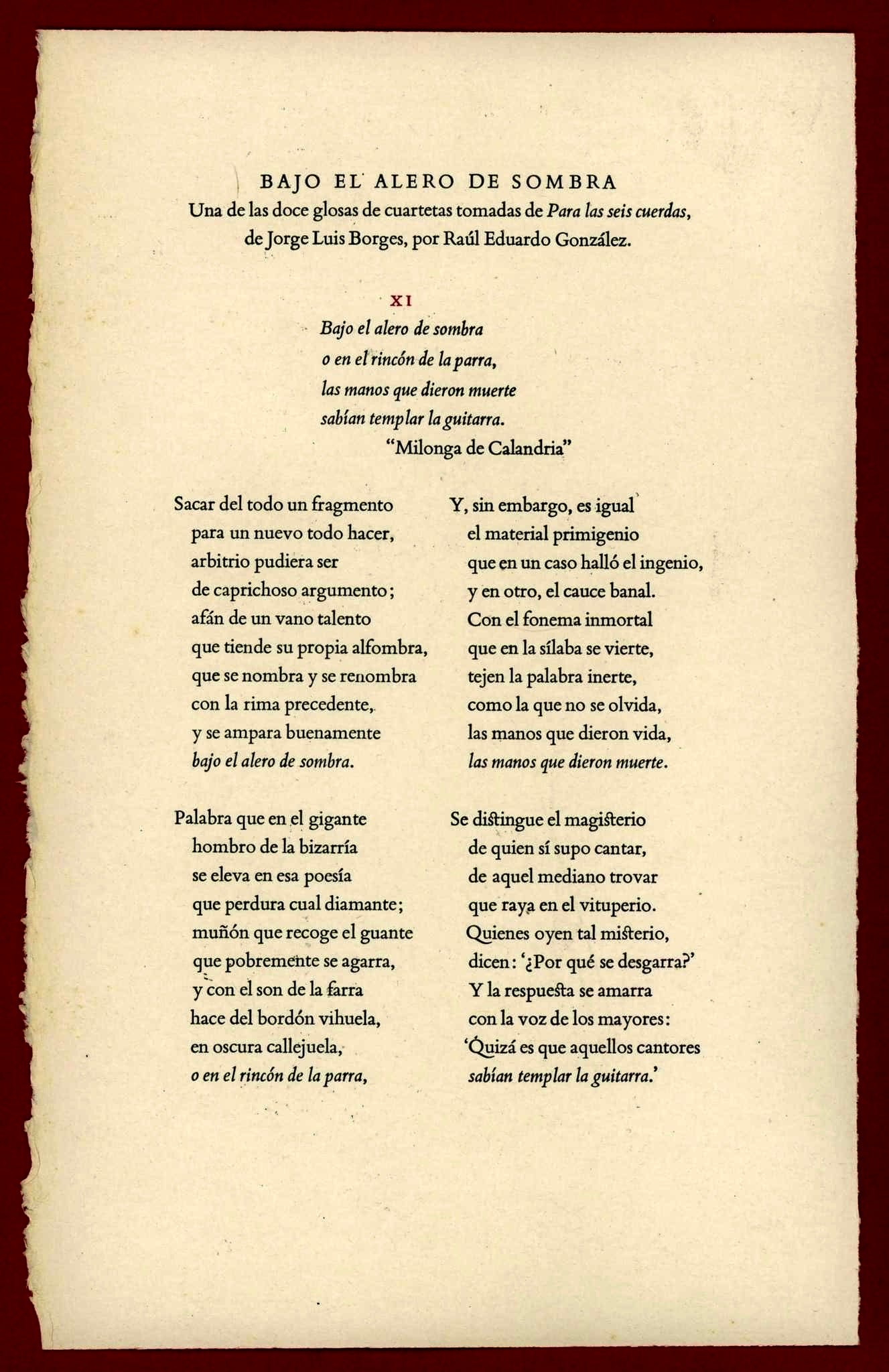
The Argentine writer Jorge Luis Borges wrote an essay, “On the cult of the book” (1960), in which he reminds us, even in the early centuries of the Christian era, reading was done aloud.
Around the year 384 A.D., as St. Augustine tells us in his autobiography, he was astonished to learn his teacher, St. Ambrose, the Bishop of Milan, was able to read “without uttering a word, or even moving his tongue.” This is our first historical attestation of silent reading in Western European civilization.
Borges points out, “this strange art, begun by [St. Ambrose], was to lead, after many years, to the concept of the book as an end in itself, not merely a means to an end.”
This concept of writing and of the book as autonomous entities has dominated European thought down to the present time.
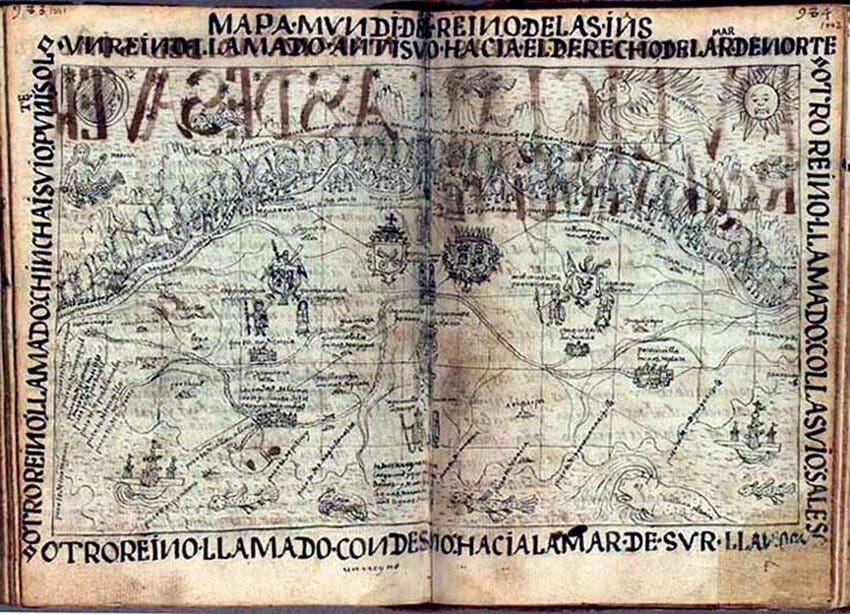
Pizarro and Atahualpa
In the period when the Portuguese and Spanish, followed by other European nationalities, began the exploration and conquest of the entire world, there began a period of intensified confrontation and frequent conflict in which the literate societies of Europe— armed not only with guns and cannons, but with their printed books of religious and legal commandments— sought to subdue non-literate societies of Africa and the Americas.
In the Western Hemisphere, the Mayan peoples of Yucatán and Guatemala already had a hieroglyphic writing system, used for books made of fig-bark paper as well as in stone inscriptions.
The Spanish religious authorities burned all the Mayan books they could find, considering them “works of the devil”, and proceeded to deal with all the native societies of the Americas as “savages”. (The surviving body of Ancient Mayan writing is still being deciphered.)
In South America, the Spaniards encountered an exceptional large and highly organized empire— the Incas, which extended from Colombia to Argentina; the Quechua language, spoken throughout this area, was not written, but official records were kept in the form of knotted strings, called quipus.
In 1532, at Cajamarca, in Peru, there came the fateful encounter between Pizarro, the Spanish conquistador, and Atahualpa, the Inca emperor. Several chroniclers reported the event in varying ways, and we cannot be sure of the details of what happened11; but the following account, translated from Léon de Bercy in 1818, points up the drama of the meeting, and the uncomprehending rage which Atahualpa must have felt when he was asked to submit his imperial powers to the authority of a book:
“Since this monarch happened to be near the Spanish camp, the chaplain of the expedition, Vicente de Valverde, approached him with a crucifix in one hand and a breviary in the other, and asked to speak to him in the name of the King. And after having explained, through an interpreter, the principal dogmas of the Christian religion, and the right held by the Pope to distribute crowns, Valverde told Atahualpa the successors of the Apostle Peter, through Alexander the Sixth, Supreme Pontiff of Rome, had divided all the lands of the world among the Christian kings; with the obligation for each to conquer a part of them.
“He urged Atahualpa to recognize his authority and embrace the religion of Christ, assuring him, if he yielded, then Don Carlos, the King of Spain, would allow him to continue ruling.
“Atahualpa replied to this insolence with these words: that he did not understand how this Peter or his descendants could give away what had never belonged to them; that such a division was more a division between bandits than it was an order of the just and powerful God who ruled the universe; that Peru belonged to the Peruvians; and that he had received his crown from his fathers and would never renounce their religion.
“Further, in response to the insistence of the Christian priest, the Inca said: ‘Are these the benefits of the religion you boast of, of sweetness and love between the Christian and his neighbor?’
“The monk told him to obey and be silent, at which Atahualpa lost his temper and said to him: ‘Despicable scoundrel, preach to me no more of a God who is born and dies. The One whom I worship is immortal, and the poor power of humans cannot reach Him: even you can see my God is much superior to yours, who you say was killed by men.
“‘Besides, how do I know you are not deceiving me with talk of such ineffable mysteries, of which neither I nor anyone in my country has ever had the slightest notion? Where did you learn all the extraordinary things you have told me?’
—“‘In this book,”’ Valverde answered, showing him a breviary, ‘the truth is contained; the word of God is imprinted in it, and all I have told you is written in it. You must believe, and have no doubts.’
“The Inca took the book, examined it with care, held it to his ear, and then said to the monk: ‘I have looked at your quipus and seen nothing; I have held it to my ear and heard nothing; if the truth is written in it, why does God not give me the grace to read, as he does to you, who are nothing but an upstart, come from afar to murder my people and pillage my realms? Begone, disgusting impostor! I know your real nature,’ added the monarch, throwing down the book with contempt.
“The outraged monk exclaimed: ‘Christians, to arms! The word of God has been profaned; exterminate these heretics!’
“Pizarro immediately gave the order for the slaughter. The explosion of the artillery petrified the Peruvians, who stood for a moment dismayed and motionless. More than four hundred were killed by the soldiers of Pizarro, who marched up to the Inca, seized him by the arm, and led him in captivity to the camp.”
The epilogue to this was Pizarro held Atahualpa ransom for an immense amount of gold; but in the end the Inca emperor was baptized under coercion, then strangled to death with the garrote.12
The Spanish conquest of South America proceeded. To the present day, the majority of the population of Peru— and much of its neighboring countries— consists of Indians who speak Quechua, who know little if any Spanish, and who are illiterate in both their own language and that of their conquerors.
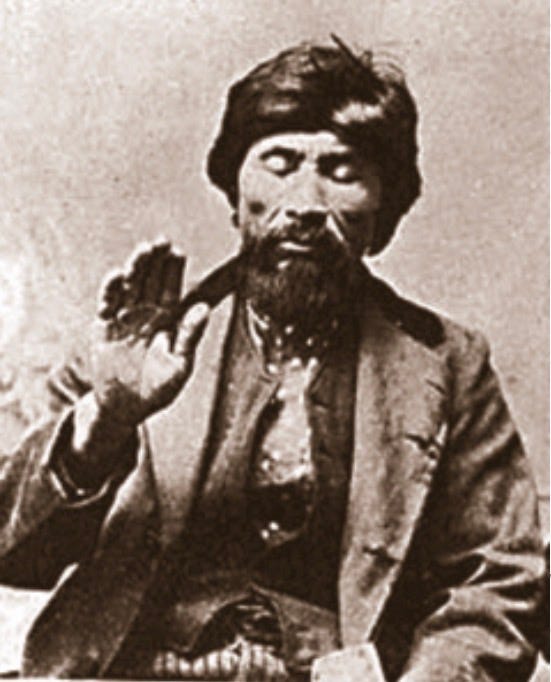
A religion based on illiteracy
In the late nineteenth century, in the northwest United States, a number of different Indian tribes, speaking a variety of languages, (including some English) —but generally literate in none— had been settled on reservations under the authority of the American government.
In this context, a new religion arose, the “Indian Shakers”— which involved a combination of native and Christian practices, and was named after the custom of “shaking” or trembling (as in many other religious groups) under the power of divine inspiration.
This religion has been the subject of an anthropological study13, and continued to be practiced into the twentieth century, as I observed during the 1960s on the Smith River Indian Reservation, in the northwestern-most corner of California.
The Indian Shaker religion was founded by an Indian named John Slocum, living just south of Puget Sound in the state of Washington. In 1881, at about the age of 40, he fell sick and apparently died; but at his wake, he revived, sat up in his coffin, and told of a visit to heaven, in which he had been instructed to return to earth and to found a new religion— which would be specifically for Indians, and as such would be based on no written scriptures at all, but on direct communication between the individual and God.
This revelation naturally aroused excitement, but Slocum himself proved ineffective as a religious leader, and eventually died in obscurity.
However, a messianic fervor began to spread, assisted by the organizational talents of an Indian named Mud Bay Louie— after the village of Mud Bay, just west of the state capital of Olympia; the head of the organization which he founded still bears the title “Bishop of Mud Bay.”
The reaction of the white authorities to the new religion— which invoked the name of Jesus, but rejected the Bible— was hostile.
Even though “shaking” was also practiced by many pentecostal or “holy roller” sects, the white members of such groups were at least nominally Bible-reading; by contrast, Indian “shaking” as a manifestation of unmediated communication with God was barely tolerated by the government, and with stern restrictions.
Two notices posted by the U.S. Indian Service at the Quileute Reservation were posted:14
The first read:
Notice to Shakers:
You are hereby permitted to hold meetings . . . under the following conditions:
On Sundays not longer than three (3) hours at one time and on Wednesdays not longer than two (2) hours at one time.
The following REGULATIONS to be observed:
1st, Keep windows or a door open during all meetings.
2nd, Use only one bell to give signals. No continuous ringing.
[The usual practice, as I have observed it at Smith River, is for members of the congregation to ring individual hand-bells during most of the meeting. The effect is deafening, conductive to an altered state of consciousness such as might be associated with religious experience.]
3rd, Do not admit school children at night meetings.
The second notice, dated six months later, shows a more exasperated level of the written bureaucratic style. It is in the form of a letter from a superintendent to the local Indian policeman:
“It has been reported . . . there are some women who are violating the Rules and they shake at all hours of the day and night. You will therefore tell the women quietly to stop shaking at any other times than the times specified in the rules.
“If they do not stop, you will lock them up until they agree to stop. Shaking for the sick must not be allowed. We do not want any trouble in this matter if it is possible to avoid it; but “continual and private shaking” must be stopped.”
In the long run, of course, the tradition of the Indian Shakers could not continue unchanged. By the 1960s, there was a schism among Shakers: on the one side were the “conservatives,” who— though by now mostly literate in English— still rejected written materials, considering them a barrier to direct religious experience; on the other side were the “progressives,” who believed in carrying Bibles to church— not actually to read, but (as one member told me) so they would look respectable before their Methodist, Baptist, or Catholic neighbors.
To the inheritors of European civilization, written language has become second nature— or even, we might say, first nature; it has come to mold our ways of thinking, even when we are not actually reading or writing; and it has come to possess, in our minds, a symbolic value of its own, entirely separate from its usefulness in communication.
But this powerful status with which writing has been endowed can diminish our memories, our perceptions, our flexibility of understanding.
The American musician and writer John Cage15 records this anecdote:
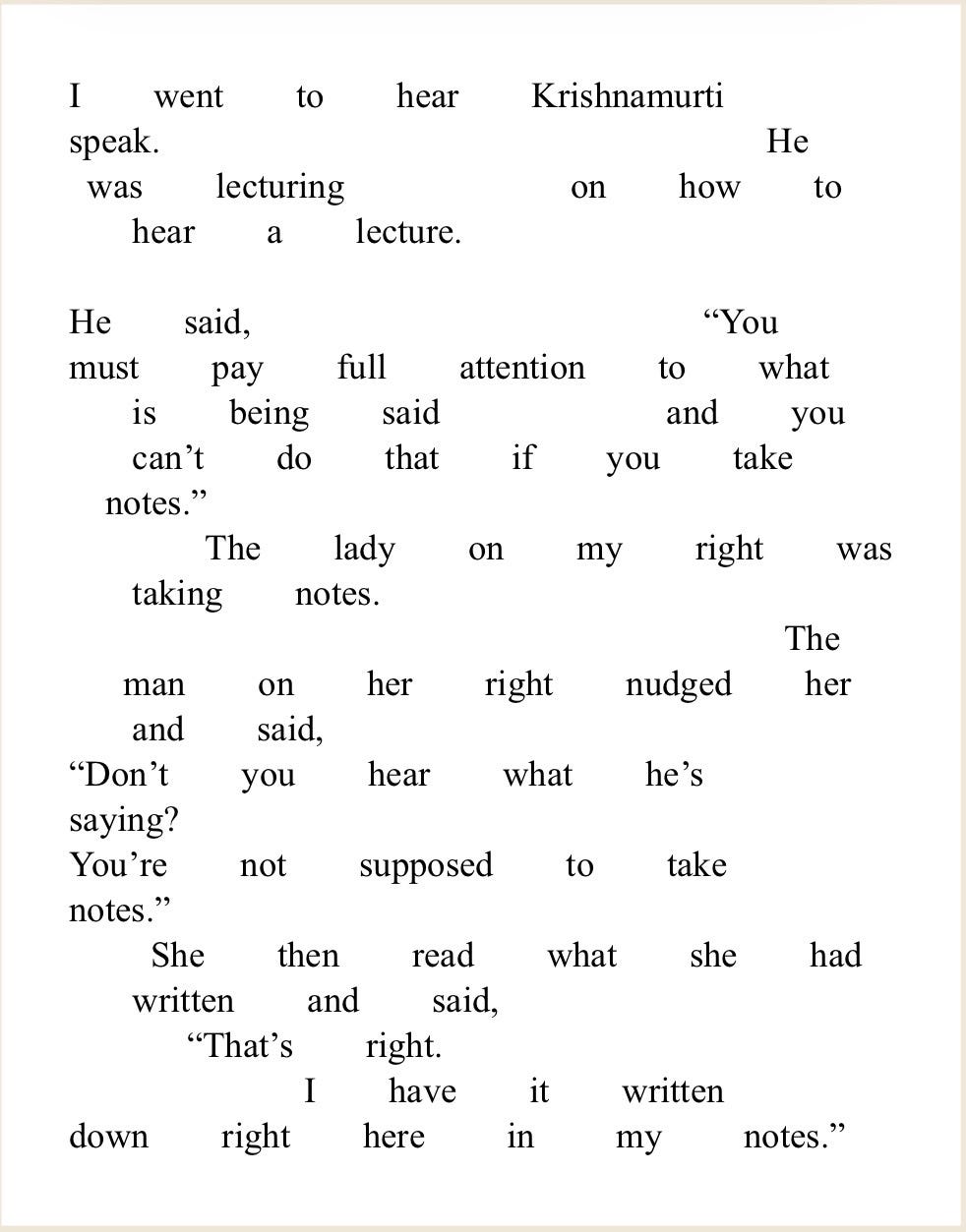
“I went to hear Krishnamurti speak. He was lecturing on how to hear a lecture. He said, ‘You must pay full attention to what is being said and you can’t do that if you take notes.’
“The lady on my right was taking notes. The man on her right nudged her and said, ‘Don’t you hear what he’s saying? You’re not supposed to take notes.’
“She then read what she had written and said, “That’s right. I have it written down right here in my notes.’”
Krishnamurti was, of course, the famous teacher from India, who was forcibly transferred to the Western world as a child, and who for years taught in an ashram in Ojai, California, near my native town of Oxnard.
Krishnamurti taught for years without publishing a word, or permitting anything he said to be published. Eventually, he permitted others to publish transcripts of tape recordings made at his lectures, and now there are many volumes by Krishnamurti in print.
After I read this anecdote in Cage’s book Silence, around 1967, my cat urinated on the book, and I had to throw it away.
By a perversion of memory, I have been telling the story over since with Daisetz Teitaro Suzuki— another of Cage’s gurus— as the central figure, instead of Krishnamurti. No one ever corrected me until I started writing this lecture, when I found Cage’s book in the library and corrected myself.
A member of a non-literate society would not have made my mistake— or have fallen into the absurdity recorded by Cage.
We who are literate, cannot cast off the literacy which has become part of us; but we can become aware of what it has cost us, of our conscious efforts to recapture the virtues of illiteracy.

Notes on the Lecture —
Susie’s Reflections on Bill’s Story, 40 Years Later
As I edited this piece, I kept thinking of how Bill and my mother (also a linguist) raised me, and I wondered how much they might have intentionally encouraged me to develop my “pre-literate prowess”, ha!, and how much was just simply repeating how they were raised.
I’d like to share my recollections, as well as the translation of the Borges poem, and the detailed citations Bill put together for the lecture.
