
It started the day we were rear-ended. We got plowed, hard.
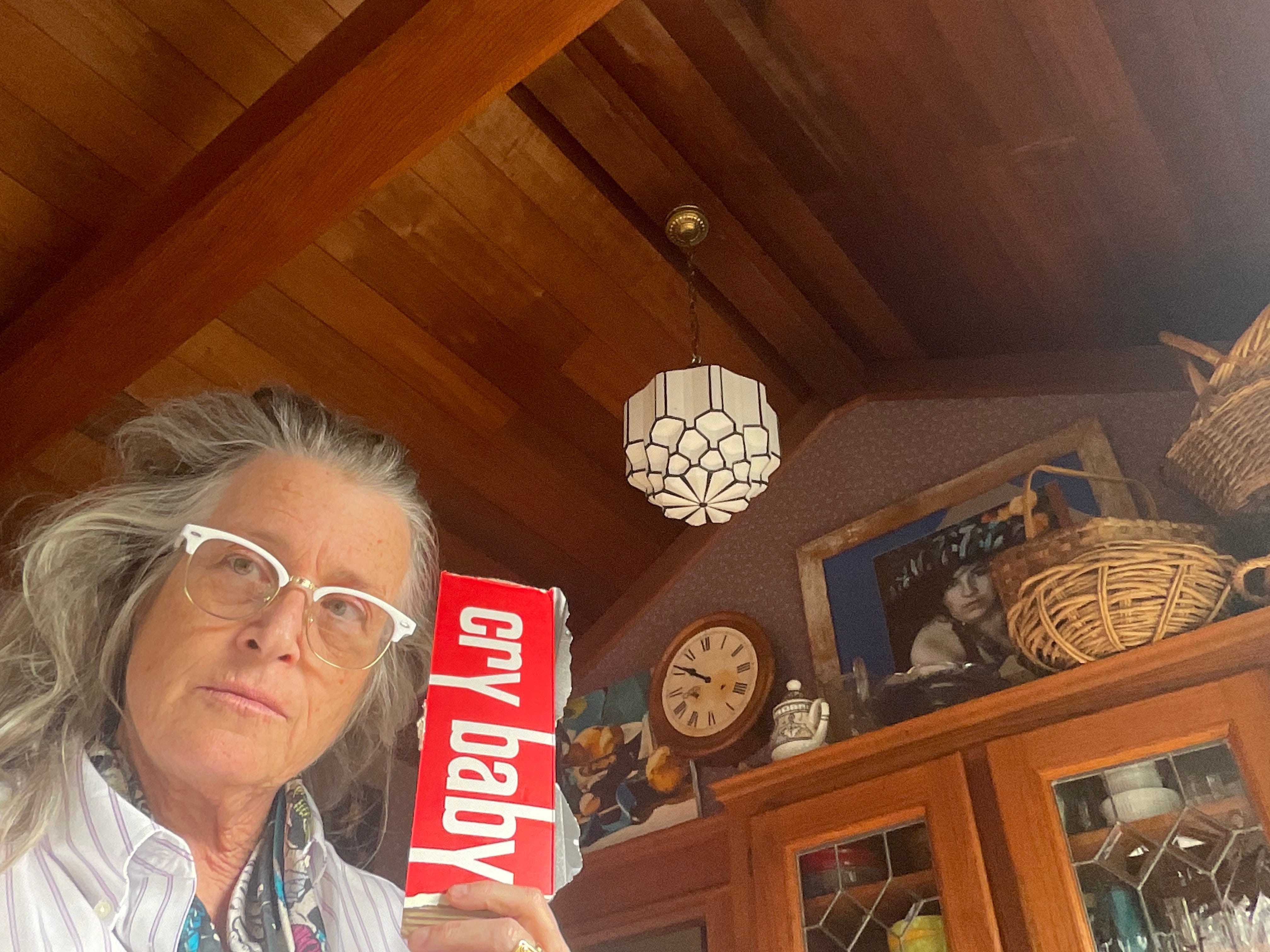
The offending driver jumped out, already crying, tears streaming down his young face, saying he was to be shipped to the Strait of Hormuz the next day; he’d enlisted because “I’ve fucked up my entire life” and he couldn’t take wrecking his parents’ car on top of everything else. “PLEASE GOD PLEASE DON’T TELL THEM.”
We started crying too because who doesn’t need a good cry at this point.
Don’t tell my mother, don’t tell my father; they’re buried here, right by my side.
Our car went to the body shop, but we shouldn’t have bothered. A body shouldn’t have been bothered.
We shouldn’t have bothered because the insurance man said we’d still have to pay $10,000.
“Well, that might as well be a million,” I said.
Well. I will not sully my poetry with Allstate’s rhetoric. As JD Vance says, the Insurance Man should be careful before he talks about matters of theology. Theirs is the language of Pilate. No matter how many times they wash their hands, the blood does not come off. “Whether it’s home, health, or auto.”
During my time without a car, I am walking around the neighborhood. My favorite fashion poet, Derek Guy, calls this experience a fast-disappearing luxury— the ability to walk around a neighborhood, where on foot you can find groceries, tacos, or cigarillos. Yes, I live walking distance from a place called CIGARS R US.
My town, Santa Cruz, is a city of 100,000– give or take a few thousand as the students ebb and flow. The summer tourists swell it to a million on the beach. It has Victorians and urban alleys and suburban blahs and wide rural fields— a mix of all things, sometimes on the same mile.
My favorite pretty blocks are closely-nested single family homes built between the two first world wars. The houses are small, and some claim the sidewalk. They are grown over with roses at the moment. Everything grows in our temperate climate. The desert plants and the artichokes, the crabgrass lawns, the fir trees and the magnolias.


On foot, I walk and walk each morning, but don’t call it fresh air and exercise. I think of my life on my feet as “street photography.” A flaneur, gently spying in the gardens and gutters. I will lie down in a muddy alley to get my shot of a towering palm sheltering owls, morning doves, and probably, rats.
I talk to people who come in and out of their cars and front porches.
One woman this morning, Judy, told me her home was built by a sea captain in 1900. “The Ghost and Mrs Muir!” I said. Her front steps were built with abalone shells pressed into the cement.
“That’s right,” she said.
“I get lots of Facebook messages,” I said, “from men who say they are lonely sea captains with full heads of silver hair and rippling tattoos of mermaids on their arms and shoulders.”
“I know;” Judy said, “me too.”
We wished they were real and would make us a drink.


I lived half my childhood around Los Angeles. The red bottle brush plant is planted all over Los Angeles, their beds flourishing the endless freeways. The plant used to fill me with dread in those years, like I was trapped forever, Catholic school punishments, the sprawling red and green hedges in the 60s thick smog that said nothing to eight-year-old me except “You are lonely and that’s the way it’s always going to be.” Their fallen bloody stringy flowers were a carpet on every sidewalk.


But now I’m grown up and the same red Callistemon in Santa Cruz looks quite innocent. The chucked mattress in the street cracks me up. I feel like calling up Zorhan Mamdani and asking for his advice.
The truth is, in Santa Cruz, we don’t have “311” like New York City, yet you still call up our mayor— they are required to answer the phone, they take shifts— and ask, where do I get rid of this street mattress and the mayor says, “Oh THAT again” and you laugh together because who is this busy mattress marauder?


The best thing I ate on my walk today was lychee fruit. They are yellow and ripe on the tree. You split the gold fruit open, but don’t eat the alkaline skin— suck out the juicy pulp inside; it’s so sweet. You can say to yourself, “Close our eyes and we are in Hawaii.”
We grow many tropicals in Santa Cruz. Fragrant ginger grows easily. Tall banana trees don’t properly fruit. It’s not hot or rainy enough. But there are lots of avocados and avocados are so expensive now that when my avocado tree bears fruit this summer I am going to sell $5 dollar avocados on the sidewalk and it will be a retirement plan like no other. Maybe $10,000 each, we shall see.


I have a new method to make neighbor friends. I admire their broken-down vintage cars stuck for years in the weeds, or tagged on the street.
—Take a gorgeous dark green Mercedes Benz for example, or the GMC El Camino. What year? I don’t know. The kind of years I like.
I wrote a note in my own handwriting — “I love your car. I don’t suppose you want to give it to me? I could spend all year fixing it with my shade-tree mechanic and then we could go for rides.”
Oh boy, did they respond.
They will never give that car up; they have plans. They’ve had plans for 40 years. They love to be flattered, the gearheads, and we sit down and smoke and juice a few oranges that are rolling around in the driveway and before you know it, I know who they’re voting for, in the next election.
I tell them, I can’t afford ten thousand for a new bumper/rear/whatever it is that’s broken, and they say FUCK ‘EM; CALL LUIGI!
I can’t get over that everyone wishes they had their own personal St. Luigi of Vengeance.
There is a new version of The Count of Monte Cristo on television right now, PBS. A French and Italian production. Remember, as I said, Hollywood, c’est fini.
If you know the story well, I suggest skipping to episode 2 of this version; the pace picks up.
Our hero Edmond Dantés is locked up to die in the Château d’If, a fate worse than death except that he meets his one other brother in this forsaken hell, the Abbé Faria, played by Jeremy Irons, who anchors the script.
The two men talk late into the night, all the knowledge of the world from the master to his protegée. They begin to dig out. The Abbé tragically dies before their final day, and he leaves Dantés a map to a 300-year-old cave of treasures: gold and rubies and diamonds.
I love the treasure scene. I could linger there. Treasure used to be a thing of beauty: jewels, carved coins and stones made by artists, even engraved parchment instead of . . . cryptocurrency.
This PBS Count of Monte Cristo is a low-key TV hit. I believe, I do believe, it is because Alexandre Dumas wrote a tale of justified and sweeping revenge.
Dantés’ life was destroyed by the corrupt and the profane, and he, in time, destroys his enemies with as much cruelty as is required.
The Abbé warns Edmond before he dies, he says, “Mon fils, if you want revenge, you must dig your own grave first.”
And we, the reader, who empathize with Edmond after his fifteen years going mad in solitary confinement, we say, “Yeah, yeah, fine. Hand me a shovel, et allons-y, motherfucker.” Our mercies were destroyed long ago.
Our impatience is because of our thirst for justice, at the price of abject loneliness.
I thirst for the same.
Yet.
I also want to eat gold fruit that falls to the ground, and lie on a dirty trampoline that someone left in the street, staring at the sky, eating lychees and spitting out the seeds with some guy who isn’t going to give me his Mercedes Benz. Not today. But what a pal. What a pal.


In Case You Missed It
The Spanish March, on Mexico City, 1519

My late father, Bill Bright, wrote a “translation poem” from an eyewitness account of the Spanish invasion of Mexico City — as described in the Florentine Codex 12:xi, by Fray Bernadindo de Sagagún, the first European ethnographer of the New World.
Love the song! Pour one out for Janis!
Thank you for writing this - jacaranda trees are in bloom also on LA streets