Your Golden Ticket: the March ‘26 Storytime Hour
Susie Bright reads stories and poems by Dorothy Allison, Margaret Atwood, Judy Grahn, Diane Di Prima, Wendy Rose, Diane Wakoski, and Danielle Willis
Story Time with Susie Bright
Good evening everyone, to the March 14 edition of Sage Lee’s “Storytime.”
My name is Susie Bright, and Sage asked me to guest-host for him while he and Ed are traveling overseas. I want to do him proud!
This is a dream come true, to continue Sage’s weekly poetry reads that have been our tradition for years.
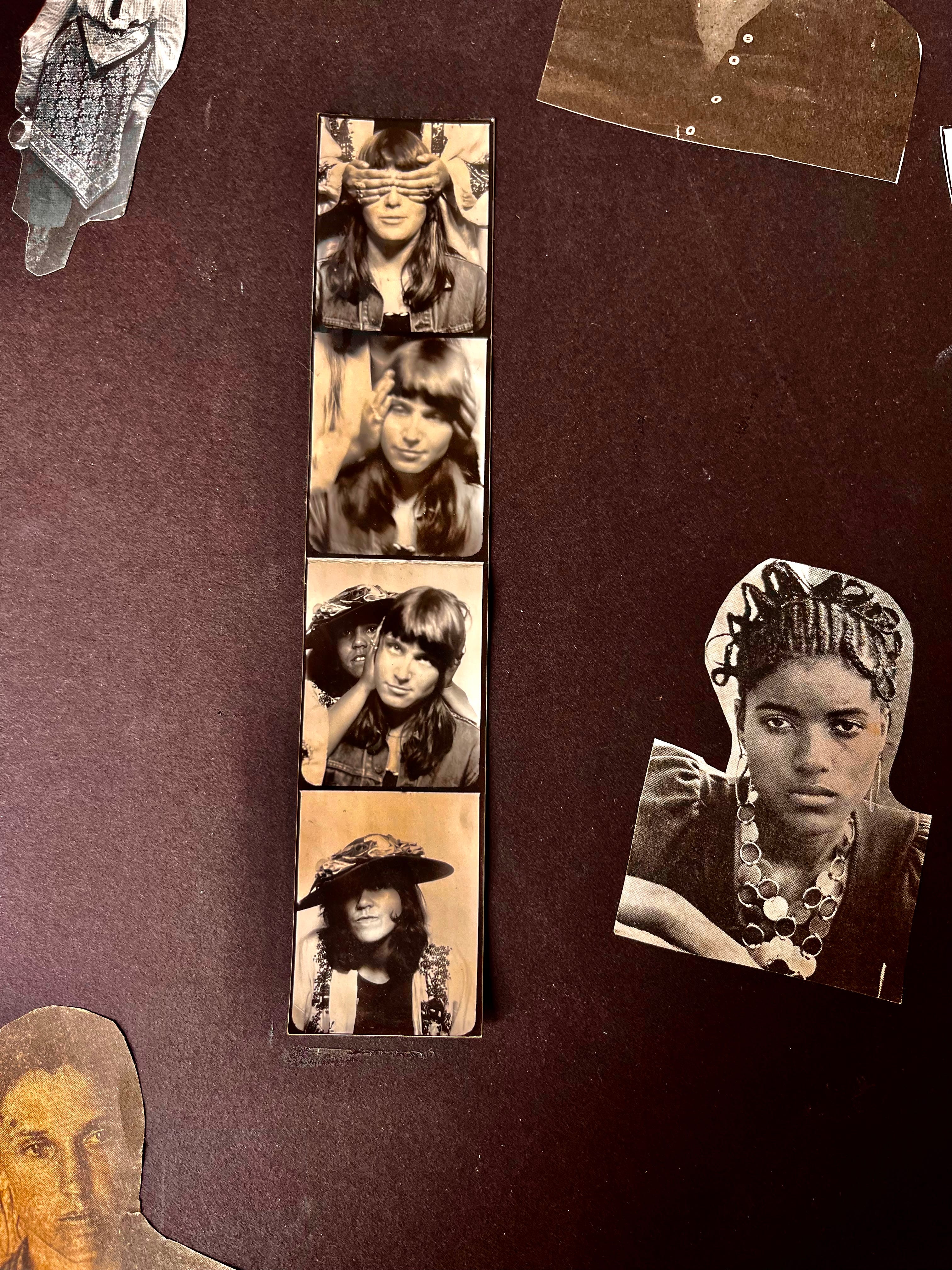
Tonight I’m going to read several poems, one short story, all written by mid-century American women. It occurred to me as I chose their works, that I discovered them at a time when to be a feminist in public life, was to be a poet— I took it for granted.
Maybe that’s where we lost our way . . . Find the poet and you find your movement.
I thought we would begin with a little therapy, so get cozy on the couch and let’s listen to our first prose poem, “The Psychoanalysis of Edward the Dyke” by Judy Grahn, published by the Women’s Press in 1971.
1. JUDY GRAHN
Judy grew up on the New Mexico Texas border, enlisted and was thrown out of the air force for being queer, went to Howard University as a white trash scholarship student, and then came to San Francisco for the lesbian community .
Her memoir is called A Simple Revolution and she is 85 years old, still working and wrting in Palo Alto, CA. She was my advisor for my Masters Thesis, which became my memoir, and later I recorded her work for Audible.
1. THE PSYCHOANALYSIS OF EDWARD THE DYKE by Judy Grahn
Behind the brown door which bore the gilt letters of Dr. Merlin Knox’s name, Edward the Dyke was lying on the doctor’s couch which was so luxurious and long that her feet did not even hang over the edge.
“Dr. Knox,” Edward began, ‘‘my problem this week is chiefly concerning restrooms.”
“ahh,” the good doctor sighed. Gravely he drew a quick sketch of a restroom in his notebook.
“Naturally I can’t go into men’s restrooms without feeling like an interloper, but on the other hand every time I try to use the ladies room I get into trouble.”
“Umm,” said Dr. Knox, drawing a quick sketch of a door marked ‘Ladies’.
“Four days ago | went into the powder room of a department store and three middleaged housewives came in and thought I was a man. As soon as I explained to them that | was really only a harmless dyke, the trouble began. . .”
“You compulsively attacked them.”
“oh heavens no, indeed not. One of them turned on the water faucet and tried to drown me with paper towels, but the other two began screaming about how well did I know Getrude Stein and what sort of underwear did I have on, and they took off my new cuff links and socks for souvenirs. They had my head in the trash can and were cutting pieces off my shirttail when luckily a policeman heard my calls for help and rushed in. He was able to divert their attention by shooting at me, thus giving me a chance to escape through the window.”
Carefully Dr. Knox noted in his notebook: “Apparent suicide attempt after accosting girls in restroom.’
“My child,” he murmured in featherly tones, “have no fear. You must trust us, We will cure you of this deadly affliction, and before you know it you’ll be all fluffy and wonderful with dear babies and a bridge club of your very own.”
He drew a quick sketch of a bridge club. “Now let me see. I believe we estimated that after only four years of intensive therapy and two years of anti-intensive therapy, plus a few minor physical changes and you’ll be exactly the little girl we’ve always wanted you to be.”
Rapidly Dr. Knox thumbed through an index on his desk. “Yes yes. This year the normal cup size is 56 inches. And waist 12 and %. Nothing a few well-placed hormones can’t accomplish in these advanced times. How tall did you tell me you were?”
“Six feet, four inches,” replied Edward.
“Oh, tsk tsk.” Dr. Knox did some figuring. “Yes, I’m afraid that will definitely entail extracting approximately 8 inches from each leg, including the knee-cap . . . standing a lot doesn‘t bother you, does it my dear?”
“Uh,” said Edward, who couldn’t decide.
“I assure you the surgeon | have in mind for you is remarkably successful.’’ He leaned far back in his chair. ‘‘Now tell me briefly, what the word ‘homosexuality’ means to you, in your own words.”
“Love flowers pearl, of delighted arms. Warm and water. Melting of vanilla wafer in the pants. Pink petal roses trembling overdew on the lips, soft and juicy fruit. No teeth. No nasty spit. Lips chewing oysters without grimy sand or whiskers. Pastry. Gingerbread. Warm sweet bread. Cinnamon toast poetry. Justice equality higher wages. Independent angel song. It means I can do what I want.”
“Now my dear,” Dr. Knox said, ‘Your disease has gotten completely out of control. We scientists know of course that it’s a highly pleasurable experience to take someone’s penis or vagina into your mouth — it’s pleasurable and enjoyable. Everyone knows that. But after you’ve taken a thousand pleasurable penises or vaginas into your mouth and had a thousand people take your pleasurable penis or vagina into their mouth, what have you accomplished? What have you got to show for it? Do you have a wife or children or a husband or a home or a trip to Europe? Do you have a bridge club to show for it? No! You have only a thousand pleasurable experiences to show for it. Do you see how you’re missing the meaning of life? How sordid and depraved are these clandestine sexual escapades in parks and restrooms? I ask you.”
“But sir but sir,” said Edward, “I’m a woman. I don’t have sexual escapades in parks or restrooms. I don’t have a thousand lovers — I have one lover.””
“Yes yes.” Dr. Knox flicked the ashes from his cigar onto the floor. “Stick to the subject, my dear.”
“We were in college then,” Edward said. ‘‘She came to me out of the silky midnight mist, her slips rustling like cow thieves, her hair blowing in the wind like Gabriel. Lying in my arms harps played soft in dry firelight, Oh Bach. Oh Brahms. Oh Buxtehude. How sweetly we got along how well we got the woods pregnant with canaries and parakeets, barefoot in the grass alas pigeons, but it only lasted ten years and she was gone, poof! like a puff of wheat,”
“You see the folly of these brief, physical embraces. But tell me the results of our experiment we arranged for you last session.”
“oh yes. My real date. Well | bought a dress and a wig and a girdle and a squeezy bodice. | did unspeakable things to my armpits with a razor. | had my hair done and my face done and my nails done. My roast done. My bellybutton done.”
“And then you felt truly feminine.”
“I felt truly immobilized. I could no longer run, walk bend stoop move my arms or spread my feet apart.’”
“Good, good.”
“Well everything went pretty well during dinner, except my date was only 5’3” and oh yes. One of my eyelashes fell into the soup — that wasn’t too bad. I hardly noticed it going down. But then my other eyelash fell on my escort’s sleeve and he spent five minutes trying to kill it.”
Edward sighed. “But the worst part came when we stood up to go. | rocked back on my heels as I pushed my chair back under the table and my shoes — you see they were three inchers, raising me to 6’7”, and with all my weight on those teeny little heels...”
“Yes yes.”
“I drove the spikes all the way into the thick carpet and could no longer move. Oh, everyone was nice about it. My escort offered to get the check and to call in the morning to see how | made out and the manager found a little saw and all. But, Dr. Knox, you must understand that my underwear was terribly binding and the room was hot...”
“Yes yes.”
“So fainted. I didn’t mean to,I just did. That’s how I got my ankles broken.”
Dr. Knox cleared his throat. “It’s obvious to me, young lady, that you have failed to control your P.E.””
My God,” said Edward, glancing quickly at her crotch, “‘I took a bath just before | came.”
“This oral eroticism of yours is definitely rooted in Penis Envy, which showed when you deliberately castrated your date by publicly embarrassing him.”
Edward moaned. “But strawberries. But lemon cream pie.”
“Narcissism,” Dr. Knox droned, ‘‘Masochism, Sadism. Admit you want to kill your mother.”
“Marshmellow bluebird,” Edward groaned, eyes softly rolling. ““ Looking at the stars. April in May.”
“Admit you want to possess your father, Mother substitute. Breast suckle.””
“Graham cracker subway,” Edward writhed, slobbering. “Pussy willow summer.”
“Admit you have a smegmatic personality,” Dr. Knox intoned.
Edward rolled to the floor. ‘I am vile! I am vile!’’
Dr. Knox flipped a switch at his elbow and immediately a picture of a beautitul woman appeared on a screen over Edward’s head. The doctor pressed another switch and electric shocks jolted through her spine. Edward screamed. He pressed another switch, stopping the flow of electricity. Another switch and a photo of a gigantic erect male organ flashed into view, coated in powdered sugar. Dr. Knox handed Edward a lollipop.
She sat up. “I’m saved,” she said, tonguing the lollipop.
“Your time is up,” Dr. Knox said. ““Your check please. Come back next week.”
“Yes sir yes sir,” Edward said as she went out the brown door.
In his notebook, Dr. Knox made a quick sketch of his bank.
2. Untitled by Judy Grahn, the very first page of Edward the Dyke
I’m not a girl
I’m a hatchet
I’m not a hole
I’m a whole mountain
I’m not a fool
I’m a survivor
I’m not a pearl
I’m the Atlantic Ocean
I’m not a good lay
I’m a straight razor
look at me as if you had never seen a woman before I have red, red hands and much bitterness
Lo-fi video recording excerpt of our Storytime hour, introducing the show, and reading Judy Grahn. It really gets going at 2:17.
DIANE DI PRIMA
Di Prima was born in Brooklyn, New York in 1934, a second generation American of Italian descent.
Her maternal grandfather, Domenico Mallozzi, was an anarchist, and comrade of Carlo Tresca and Emma Goldman. She began writing at the age of seven, and committed herself to a life as a poet at the age of fourteen.
She raised five children in San Francisco, and sadly died during COVID in 2020. Many of us gardened, hand printed, and wrote, and demonstrated with Diane.
Her book Revolutionary Letters, first published in 1966, with many poems referencing the Vietnam War, is one of the most influential chapbooks, along with Howl, that came out of the San Francisco poetry movement and City Lights Press.
REVOLUTIONARY LETTER #1, by Diane Di Prima
I have just realized that the stakes are myself
I have no other
ransom money, nothing to break or barter but my life
my spirit measured out, in bits, spread over
the roulette table, I recoup what I can
nothing else to shove under the nose of the maître de jeu
nothing to thrust out the window, no white flag
this flesh all I have to offer, to make the play with
this immediate head, what it comes up with, my move
as we slither over this go board, stepping always (we hope) between the lines
TO THE UNNAMED BUDDHIST NUN, WHO BURNED HERSELF TO DEATH ON THE NIGHT OF JUNE 3, 1966]
Outside your temple wall. Stone or wood, I can’t
quite see the detail; under this last full moon
which I did see. Moon of this June, unearthly light
heavy with potency, the air filled with the smells
and buzzing of springtime
you with your shaved head and can
of kerosene. Under what driving form
of ecstasy? I pray to taste it once
your soaked robe chilly in the spring night wind
‘Oh nun, is it hot in there?’
‘Only a stupid person like yourself would ask
such a question.’
DANIELLE WILLIS
From Dogs in Lingerie, 1990, Zeitgeist Press, a press which was created in 1986 to capture that magic in a bottle that was coming out of the Café Babar readings of the same period.
One of our regulars here at Storytime, Camille Roy, wrote a review of Willis where she said, Danielle was “a vampire lesbian drag queen,” one who had a Swiftian sense of humor.
Her debut remains a classic of the punk era. After a much-acclaimed anniversary edition in 2000, Danielle seemingly vanished. There was a great deal of debate about whether she was alive. I believe she is, and well, and we are the same age.
THE KILLER
the killer drove south
over the crushed head of a jackrabbit
in a pale green Chevrolet with the
radio crackling the
thin ghost of a mariachi band and
a suppository melting like a
sharp pebble in his rectum
around 2AM he came to a
small coastal town ravaged by meningitis
the local broadcast said
ten or twelve were dead already,
spinal cords shorted out like
telephone cables in the rain
there was no news of pursuit,
only a distant farm report and
miles of indecipherable static
the killer smiled, dangled
his arm out the window
the air settled on his skin
warm as gasoline and he
wondered if a brain could
become so engorged with fever
the skull would crack open
he still had traces of the
migraine he’d developed
three states ago and every time
he shifted his weight gum wrappers
popped like cellophane bottle rockets
in the lining of his coat
the last time he washed his clothes
was at some deserted laundromat on
the outskirts of Philadelphia
it was four in the morning and
someone had drowned a cat in
one of the washing machines
its fur was pressed flat and orange
against the glass and the
killer stared at it until
his clothes were done, then
got back in his car and
drove away wondering
what kind of asshole would
do something like that—
probably some jackoff who
still lived with his parents and
kept a collection of dead animals
hidden away in the basement under
a pile of ancient tabloids and
crude pencil sketches of his sister
fucking the family German shepherd
the incident irritated him all
the way to Atlanta where he
got himself a gun and a hotel room that
smelled of rainwater and chipped plaster
and sat up all night playing Russian Roulette
until he calmed down and fell asleep dreaming
of highways and stomachs split open
brilliant as pinatas at a child’s birthday party
the killer hated amateurs—
they made the artists look stupid
in the morning he headed west toward
Hollywood and Spahn ranch but
lost interest a few days later
somewhere in Texas and pulled into
an all night diner for a cup of coffee
and a slice of lemon meringue pie
the waitress had puffy white arms that
jiggled when she took his order
she told him her name was Amber and
she was getting off work in half an hour
it he wanted to go home with her
the killer hadn’t had sex in almost three months—
sometimes when he’d been driving
for a few days straight the road blurred
into a black and white pornographic
film loop where everyone dressed like
it was the 1930s and the celluloid
jumped and sputtered whenever anything
remotely graphic began to happen
the waitress took him back to her apartment
and led him into the bathroom where she
showed him a dime-sized hole she’d
drilled next to the medicine cabinet
the killer pressed his eye to it and
stared in at a naked fat man sitting
cross-legged on the floor holding
an enormous iguana in his arms
he was feeding it crickets from a mason jar
and saying Pretty Girl, Pretty Girl
over and over again
the waitress said she could
hear him through the walls all night
she told the killer to
stay where he was and got down
on her knees and unzipped his pants
he came in her mouth staring into
the green and gold eyes of the iguana
just as the fat man gave it a
sloppy kiss on the top of its head
the waitress brushed her teeth and
sent the killer down to the corner store
for some beer and groceries
the cashier was a skinny albino with
a huge Adam’s Apple that jumped up and down
like a pale frog in his throat
the killer only had seventy-eight cents
and a condom his father had given
him back in 1955 s0 he bought a
stale candy bar and a few pieces of bubblegum
and got back on the interstate heading south
until his car ran out of gas
somewhere in the desert
he pushed it off the road and
climbed into the back to sleep
there were wire springs like fingerbones
pushing up through the worn seat covers
and the killer dreamed he was trapped in the
final panel of a comic book horror story
where the dead rise from the grave
to punish their murderer
in the morning he drank the chalky dregs
of a bottle of Kaopectate he found in
the glove compartment and wondered if he was developing a conscience.
DIANE WAKOSKI
Diane was born in Whittier CA, in 1937. She went to Cal in the late 50s, studying poetry, and was publishing her most influential work in the early 60s, in an otherwise all men’s milieu.
Wakoski was straight woman, not id’ed as a feminist early on, a straight woman drawn to rough trade, much like Chrissie Hynde with her tattooed love boys decades later..
Wakoski became a celebrated poet and professor at Michigan State, East Lansing, where she has retired.
She often wrote using Tarot cards as prompts, long before that became as popular as it is today. The following poems I’ll read are from Inside the Blood Factory, 1962-1968
The Empress
If she were arrested
in the middle
thought
her mind-a crystal wafer,
the lens so small it could be lost in the cat’s fur
might crack
OI be scratched.
Leave each process
Let it unfold.
A bud, her breast.
An acorn, underneath.
One day you found the corn with its new shoot exposed.
One day in the winter.
I would think it an accident.
Still,
I would say, it doesn’t matter.
The Empress No. 5
She took the bone from her arm.
This music frenzied the wild gazelles and the milk pigs running under the high arches of her feet and past her heavy black-budded breasts.
Taking this instrument
to / file / the words / in her shawl, spilling out in dis-order, honing each syllable
till the screeching became a har-mony, till the buzz
became small on the smooth edge of a word, she set herself
a simple task. But the music in her own armbone was so loud / she set / the thicket / within her
running. Arm bone. Arm bone. Arm bone.
The arm bone sings. The arm bone sings.
And the gazelles leap under her armpits.
The small pigs snuffle and run past lips. The birds caw, caw.
What noise / as she only makes / a word.
Commotion for every syllable
DOROTHY ALLISON
Dorothy Allison was born in 1937 in South Carolina, and died at home on the Russian River in 2024 with her family and closest friends.
We hosted a memorial for her last fall in San Francisco, where we read the entirety of her novel “Bastard out of Carolina” from dawn until nightfall.
The work I’ll read next, from The Women Who Hate Me. Poetry 1980-1990, Dorothy penned immediately following the Barnard Sex Conference on Sexuality in 1982. She was a panelist and she, along with our friends on the sex-positive left, were picketed and physically threatened by a group who called themselves, “Women Against Pornography,” — they called us, and Dorothy, “anti-feminist terrorists.”
This was before that word was grabbed by the GOP.
WAP accused her of abuse and savagery. The turning point became what scribes dubbed “the feminist sex wars.” Despite being a focus of future academic interest, at the time, it was dangerous and ugly. She and I were in the thick of it.
I remember she sent me the first draft “The Women Who Hate Me” by email. The title alone made my blood run cold.
I asked her if she was really going to publish it. I said, “These people are literally out for our throats,” and she said, “Yes, that’s why I have to do it.”
The Women Who Hate Me, by Dorothy Allison
1.
The women who do not know me.
The women who, not knowing me, hate me
mark my life, rise in my dreams and shake their loose hair
throw out their thin wrists, narrow their already sharp eyes
say Who do you think you are?
Lazy, useless, cuntsucking, scared, stupid
What you scared of anyway?
Their eyes, their hands, their voices.
Terrifying.The women who hate me cut me
as men can’t. Men don’t count.
I can handle men. Never expected better
of any man anyway.
But the women,
shallow-cheeked young girls the world was made for
safe little girls who think nothing of bravado
who never got over by playing it tough.
What do they know of my fear
What do they know of the women in my body?
My weakening hips, sharp good teeth,
angry nightmares, scarred cheeks,
fat thighs, fat everything.
Don’t smile too wide. You look like a fool.
Don’t want too much. You ain’t gonna get it.
Ain’t gonna get it.
Goddamn.
Say goddamn and kick somebody’s ass
that I am not even half what I should be
full of terrified angry bravado.
BRAVADO.
The women who hate me
don’t know
can’t imagine
life-saving, precious bravado.
2.
God on their right shoulder
righteousness on their left,
the women who hate me never use words
like hate speak instead of nature
of the spirit not housed in the flesh
as if my body, a temple of sin,
didn’t mirror their own.
Their measured careful words echo
earlier coarser stuff say
What do you think you’re doing?
Who do you think you are? Whitetrash
no-count
bastard
mean-eyed
garbage-mouth
cuntsucker
cuntsucker
no good to anybody, never did diddly hit anyway
You figured out yet who you ain’t gonna be?
The women who hate me hate
their insistent desires, their fat lusts
swallowed and hidden, disciplined to nothing
narrowed to bone and dry hot dreams.
The women who hate me deny
hunger and appetite,
the cream delight
of a scream
that arches the thighs and fills
the mouth with singing.
3.
Something hides here
a secret thing shameful and complicated.
Something hides in a tight mouth
a life too easily rendered
a childhood of inappropriate longing
a girl’s desire to grow into a man
a boyish desire to stretch and sweat.
Every three years I discover again
that no, I knew nothing before.
Everything must be dragged out,
looked over again .
The unexamined life is the lie, but still
must I every time deny
everything I knew before?
4.
My older sister tells me flatly
she don’t care who I take to my bed
what I do there
Tells me finally
she sees no difference between
her husbands, my lovers. Behind it all
we are too much the same to deny.
My little sister thinks my older crazy
thinks me sick
more shameful to be queer than crazy
as if her years hustling ass,
her pitiful junky whiteboy
saved through methadone and marriage, all that
asslicking interspersed with asskicking,
all those pragmatic family skills we share mean nothing
measured against the little difference
of who and what I am.
My little sister too
is one of the women who hate me.
5.
I measure it differently, what’s shared,
what’s denied, what no one wants recognized.
My first lover’s skill at mystery,
how one day she was there, the next gone;
the woman with whom I lived for eight years
but slept with less than one;
the lover who tied me to the foot of her bed
when I didn’t really want that
but didn’t really know
what else I could get.
What else can I get?
Must I rewrite my life
edit it down to a parable where everything
turns out for the best?
But then what would I do with the lovers
too powerful to disappear the women
too hard to melt to soft stuff?
Now that I know that soft stuff
was never where I wanted to put my hand.
6.
The women who hate me
hate too my older sister
with her many children, her weakness for
good whiskey, country music, bad men.
She says the thing women’s lib has given her
is a sense that she doesn’t have to stay too long
though she does
still she does
much too long.
7.
I am not so sure anymore of the difference.
I do not believe anymore in the natural superiority
of the lesbian, the difference between my sisters and me.
fact is, for all I tell my sisters
I turned out terrific at it myself:
sucking cunt, stroking ego, provoking,
manipulating, comforting, keeping.
Plotting my life around mothering
other women’s desperation
the way my sisters
build their lives
around their men.
Till I found myself sitting at the kitchen table
shattered glass, blood=2 0in my lap and her
the good one with her stern insistence
just standing there wanting me
to explain it to her save her from being
alone with herself.
Or that other one
another baby-butch wounded girl
How can any of us forget how wounded
any of us have to be to get that hard?
Never to forget that working class says nothing
does not say who she was how she was
fucking me helpless. Her hand on my arm
raising lust to my throat that lust
everyone says does not happen
though it goes on happening
all the time.
How can I speak of her, us, together?
Her touch drawing heat from my crotch to my face
her face, terrifying, wonderful
Me saying, “Yeah, goddamn it, yeah,
put it to me, ease me, fuck me, anything…”
till the one thing I refused
then back up against a wall
her rage ugly in the muscles of her neck
her fist swinging up to make a wind
a wind blowing back to my mama’s cheek
past my stepmother’s arm.
I ask myself over and over how I
came to be standing in such a wind?
How I came to be held up like my mama
with my jeans, my shoes locked in a drawer
and the woman I loved breath ing on me,
“You bitch. You damned fool.”
“You want to try it?”
“You want to walk to Brooklyn
barefooted?”
“You want to try it
mothernaked?”
Which meant of course I had to decide
how naked I was willing to go where
Do I forget all that?
Deny all that?
Pretend I am not
my mama’s daughter
my sister’s mirror?
Pretend I have not
at least as much lust
in my life as pain?
Where then will I find the country
where women never wrong women
where we will sit knee to knee
finally listening
to the whole
naked truth
of our lives?
WENDY ROSE
Wendy was born in 1948, Oakland, left home early, joined A.I.M. And was part of the original Alcatraz Island protest. She later got her doctorate at Cal in anthropology where she said she felt like a spy. her late father was Hopi, and her mother, white-passing and Miwok.
My father Bill gave me one of her books when I was in High School and I’ve been reading her work ever since. The following is from The Half Breed Chronicles & Other Poems, 1985.
If I Am Too Brown or White For You, by Wendy Rose
remember I am a garnet woman
whirling into precision
as a crystal arithmetic
or a cluster and so
why the dream
in my mouth,
the flutter of blackbirds
at my wrists?
In the morning
there you are
at the edge of the river
on one knee
and you are selecting me
from among polished stones
more definitely red or white
between which tiny serpents swim
and you see
that my body is blood
frozen into giving birth
over and over, a single motion,
and you touch the matrix
shattered in winter
and begin to piece together
the shape of me
wanting the curl in your palm
to be perfect
and the image less clouded,
less mixed,
but you always see
just in time
working me around
the last hour of the day
there is a small light
in the smoke, a tiny sun
in the blood, so deep
it is there and not there,
so pure
it is singing.
MARGARET ATWOOD
I first met Margaret in the 1970s through the lesbian poet Jane Rule, whom I became friends with by Honey Lee Cottrell and Tee Corinne. Both of them were at the beginning of the feminist Canadian poetry scene.
Much later, I worked with Margaret in Toronto during her heyday after “The Handmaid’s Tale” television series. Tragedy struck in the midst of it all: her husband Grahame Gibson died in 2019. It was awful and came out of the blue.
A couple years later, I started printing fine art editions with Arion Press, and I asked Margaret if she’d like to write an original story, which Audrey Niffenegger would illustrate.
Atwood’s inspiration for the story, as you’ll see, is a classic poem by Alfred Tennyson, the 19th century Poet Laureate of England, who wrote the saga, “Morte d’Arthur” as an homage to the legend of the King Arthur and his sword, Excalibur
“Morte de Smudgie,” a short story by Margaret Atwood, © 2024
read aloud, by Susie Bright.
Grieving takes strange forms.
When Nell and Tig’s cat Smudgie died, Nell dealt with her disproportionate sense of loss by rewriting Tennyson’s Morte d’Arthur with Smudgie in the leading role, supported by a full cast of noble cats in mediaeval robes and chain mail. This was a deeply frivolous thing for her to do, and the results were not felicitous:
A paw,
Clothed in white samite, mystic, wonderful . . .
Nevertheless she laboured painstakingly over her transliteration, tears dropping onto the keyboard. Those Victorians, so adept at death, she thought, wiping her eyes, slowing her breathing. No wonder, since so many of them did in fact die. They dropped like flies, of consumption, of brain fever, of wasting away, of who knows what? It was their lack of sanitation, their ignorance about germs, and their hopeless ideas about what to feed people, especially young children. They felt it was wrong to give the kids anything that wasn’t white. White bread, sugar, milk pudding, mashed potatoes, rice. Vegetables and fruits were too rough for their infant digestions, meat dangerously increased the animal spirits. The poor things were practically transparent – greenish and rickety – and if they cried, a hefty dose of gripe water laced with opium would soothe them to sleep, often permanently. Then they’d become little angels, watching silently from the silvery daguerreotypes that might have been taken of them, though only for more affluent parents.
Funerals were a major art form back then. One London merchant, anticipating the period of extravagant mourning that would follow Queen Victoria’s death, cornered the market in black velvet and made a fortune.
Black velvet sent Nell into a convulsion of sobs. Smudgie, so black and velvety! So deep, so dark, so moonlit! Why was she being this idiotic about him? He was only a cat.
There is no only a, she told herself. Nothing and no one is only a. In any case he’d been the sole entity who could read her innermost mind, a location she kept sealed away from everyone else, even Tig. Especially Tig: he would have been frightened by it. But Smudgie would sit on her lap, gazing up into her eyes with his own round yellow eyes, tail twitching slightly, communing with her secret self: so fanged, so taloned, so intent on prey. It was a good thing for the world, she often thought, that she’d succeeded in controlling this daemon of hers. If she’d let it out, think what carnage would have followed.
So all day long the noise of battle roll’d
Among the mountains by the winter sea;
Until King Smudgie’s Table, cat by cat,
Had fallen in Lionnesse about their Lord,
King Smudgie: then, because his wound was deep,
The bold Sir Cativere uplifted him . . .
In reality Smudgie had not been much of a valiant knight type. Birds had harassed him, squirrels had taunted him when he dozed on the back yard picnic table; Nell had seen one of them jump on him, daring him to chase it. He’d never caught any prey, to her knowledge; nor did he win fights with other cats. She’d once found him cowering and shivering in a window well, avoiding the front door because one or a number of tomcats had sprayed on it, challenging him to a duel. Then there was that time he’d come back to the house with another cat’s claw stuck in his nose.
But despite his lack of heroic spirit, Smudgie knew things about her. Significant, dangerous, arcane things. Surely he did, him with his penetrating yellow eyes. More of a Merlin than an Arthur, then: more of a sorcerer, more of a diviner . . .
Sentimental woo-woo rubbish, she told herself. True, Smudgie did know things, but those things were limited to who opened the cat food tins and which cupboard they were kept in. Though he did seem fully aware whenever it was his day to be taken to the vet. How many times had she crawled around under large pieces of furniture, attempting to retrieve him? It usually took the two of them, Nell squeezing beneath the bed with a broom, Tig to intercept Smudgie as he shot out from under.
“Come here, you swine!” Tig would shout, and then he would shout some more as Smudgie dug his claws into Tig’s hands. “Throw a towel over him!” “Quick, open the door!” This of the cat carrier.
“Aw sweetie, it will be all right,” Nell would say falsely as Smudgie growled and drooled, glaring at her through the bars. Traitor! How could she entrap him like this?
Those times at the vet’s, however it was all right: it was just some shots and a peek inside the ears for mites. Though once back at the house, Smudgie would not speak to her for days, and might poop in the bathtub as a punishment. That was how intelligent he was: he didn’t poop on the floor, gauging rightly that a slip on a cat turd might push Tig’s patience over the edge. Bathtubs were easy to clean.
Though maybe Smudgie had been clairvoyant after all, because a vet had indeed been the finish of him.
My end draws nigh; ‘t is time that I were gone.
Make broad thy cat carrier to receive my weight,
And bear me to the vet place; yet I fear
My wound hath taken cold, and I shall die.
“Feline diabetes,” said the vet. “You can treat it, but you’d have to give him a needle every day, and also take a urine sample.”
Nell and Tig had been away at the time, in Ireland, doing whatever they used to do on such trips. The person talking to the vet was Nell’s baby sister Lizzie, who was holding the fort in respect to cats. She called Nell long distance— this was before email or cell phones— to report the bad news.
“How many times do you think he’d let anyone give him a needle?”
Nell said. “Never mind a urine sample. Excuse me, Smudgie, could you just pee in this bottle? He’s very prudish, he never lets anyone watch him when he’s peeing.”
“Once,” said Lizzie. “If that. For the needle. Then he’d run away.”
Nell couldn’t bear to think of Smudgie cowering under a bush in the rain because he was afraid to go home. Getting sicker and sicker, suffering more and more, alone in the dark. Forlorn. Dwindling unseen. Should she fly home to be with him? But with him for what?
“I should come back,” said Nell. She knew what Tig would have to say about that. Are you sure it’s the right decision? It wasn’t.
“Don’t be silly,” said Lizzie. “I can handle it.”
“Can you? Will you be all right?”
Lizzie had an overly empathetic temperament, and was a spider rescuer.
“Of course,” said Lizzie.
But she wasn’t all right. The next day there was another phone call: Lizzie again, crying so hard she could barely speak. “It’s Smudgie,” she said. “He’s dead! I took him to the vet, I stayed with him the whole time. He growled. He knew, he knew, he knew what was happening!”
“Where is he?” Nell asked. Usually the vet would just slide in the needle and then dispose of the corpse. She’d had cats before.
“I thought you might want to . . . you might want to bury him yourself, in the back yard,” Lizzie sobbed.
Nell did not particularly wish to do that, but she said “Yes, of course.”
“So I wrapped him in a piece of red silk brocade and, and, and, I put him in the freezer!”
It was typical of Lizzie to have a spare piece of red silk brocade on hand. She liked to shop for remnants in fabric stores and then consider what she might make out of them, but she’d probably never anticipated dead-cat-wrapping for the brocade. Cerements, thought Nell. How Egyptian. Or more like a preserved saint, freeze-dried and put on show in a cathedral. Would there be holy relics of Saint Smudgie distributed or sold? Would there be pilgrimages? Would there be miracles?
“With the hamburgers?”Nell asked.
Lizzie had two roommates: Nell hoped Lizzie had informed them. She didn’t like to think of one of them pawing through the frozen packages in search of dinner and coming upon red-brocaded Smudgie unexpectedly, fur-covered, stiff, with white incisors showing between his shriveled lips. What the fuck is this?
How helpless the dead are, Nell thinks. What humiliations occur to them. Not that they care.
Saying With the hamburgers had been tactless. She should have said Thank you.
“Thank you.”
“Was that okay?” Lizzie asked anxiously. “To save him for you? I didn’t know what else to do.”
“It’s perfect,” said Nell. When she got back she might dig a hole somewhere in the perennials. But there were skunks: they were likely to unearth Smudgie and strew him about. That should not be allowed to happen. What then? Tiptoe along the street and around the corner carrying a frozen packet, slip it into someone else’s garbage bin? Was there a law against that?
After this phone call she’d told Tig about Smudgie being stashed in the freezer, wrapped in a majestic red robe and nestled among the peas and sausages. Tig had been delighted, and had laughed quite a lot. He had an almost Mexican way of making fun of death. Or not making fun, exactly: acknowledging that death was part of life. Little painted clay skeletons dressed in the clothes they wore in life, going about their occupations: gambling, playing musical instruments, sitting at office desks. Tig and Nell had some of those in their bathroom, collected on one of their excursions. Their possibly too frequent escapes from real life.
“So long as he doesn’t end up in the oven,” Tig had said.
Nell had laughed too. She was still in shock, she hadn’t yet entered her full mourning phase. The veils, the weepers, the black velvet.
But even then she’d thought: it can’t be a garbage bin. Some ritual was surely required, something more respectful. Some ceremony else.
Maybe that was why she was rewriting Tennyson, though as she moved slowly through the text, transmuting a word here, a phrase there, she became more unsure of the therapeutic value of what she was doing. Was this an act of commemoration or simply a mutilation? Not that there was always a difference.
And on a sudden, lo! the level lake,
And the long glories of the winter moon.
Then saw they how there hove a dusky barge
Dark as a funeral scarf from stem to stern,
Beneath them; and descending they were ware
That all the decks were dense with stately Cats
Black-stoled, black-collared, like a dream—by these,
Three Pusses crowned with of gold—and from them rose
A meow that shiver’d to the tingling stars,
And, as it were one caterwaul, an agony
Of lamentation, like a wind, that shrills
All night in a waste land, where no cat comes,
Or hath come, since the making of the world.
Nell typed on, sniffling. King Smudgie was placed in the barge. He was lamented over, a lot, by the three mystical Cat Queens, who represented the Great Triple Goddess in her third avatar, the Queen of the Dead that came after the Maiden and the Mother. The Morrigan, wailer at the deaths of heroes, Nell added silently, for in those days Nell was up on her Irish pre-Christian belief systems as well as the Mediterranean stuff.
So like a shatter’d column lay the Cat;
Not like that Smudgie who, with tail at rest,
From claw to ears a star of
(what to say here? Smudgie was not much of a star at anything)
Shot thro’ the flowers at Catelot, and charged
Before the eyes of pusses and of toms.
Then the Queens had stopped lamenting. Now for the King’s big speech:
And slowly answer’d Smudgie from the barge:
“The old order changeth, yielding place to new,
And Cat fulfils Himself in many ways,
Lest one good cat food should corrupt the world.
Comfort thyself: what comfort is in me?
I have lived nine lives, and that which I have done
May Cat within Himself make fur! But thou,
If thou shouldst never see my face again,
Purr for my soul. More things are wrought by purrs
Than this world dreams of . . .
But now farewell. I am going a long way . . .
At this point Tig came into the room. “I’m having a Scotch,” he said. “Join me?” Then, after a pause, “What’s wrong?” He wrapped his long arms around Nell and kissed the top of her head.
“Maybe we should get another cat,” Nell snuffled into his shirt front. Scant hope of that. The cat box was usually Tig’s chore, not one he enjoyed.
“We already have another cat,” said Tig.
Which was true: there was Smudgie’s sibling, Puffball, who flirted with strangers and hadn’t much of a brain to speak of. She was everyone’s cat; whereas Smudgie had been Nell’s, if anyone’s.
“It’s not the same,” Nell sobbed. What was this mania of hers for having everything remain the same? Why did she want to stop time, emprison them in some grotesque Brigadoon where nothing ever changed? Anyway it couldn’t be done, so why wish for it? “Sorry,” she said. “I’m just finishing something. I’ll be down in a minute.”
Long stood Sir Cativere
Revolving many memories, till the hull
Look’d one black dot against the verge of dawn,
And on the mere the meowing died away.
Tennyson had re-written the ending later, though, in his Idylls of the King. The reduction of Arthur to a black dot must have been too doleful even for him. The second ending was almost greeting-card:
And the new sun rose bringing the new year.
Which was quite a different thing, Nell thought. Symbol of hope, etcetera. Not just a dwindling black dot. Though she couldn’t decide which ending she preferred.
She printed out her transfigured poem. Morte de Smudgie. Even the title was ridiculous. After a minute she tore it up and stuffed the pages into the wastebasket. It was terminally stupid, a futile thing to have done. Why had she bothered? She needed a drink, so she went downstairs to have one, with Tig. It was a thing they used to do before dinner, once the kids were no longer in the house.
*
Now here she is, in the present, revolving many memories. No cats now. The Tennyson rewrite thing had been, when? Twenty-five years ago, when she and Tig had still been young, though they hadn’t thought back then that they were young. Middle-aged. Past the halfway mark. Countdown days. Already they’d been making jokes about creaky knees. What did they know about creaky knees back then? They could still go hiking, for heaven’s sakes. When had that become impossible?
It hadn’t really been about Smudgie. It had been about Tig. She must already have known on some level that he was bound to set sail first, leaving her stranded in the harsh frost, in the waste land, in the cold moonlight.
And now he’s done it. He’s no longer on the shore; he’s moving away from her, over the water, diminishing, vanishing.
What about her? Will it be nothingness or sunrise? Or both, but in what order? And could they perhaps be the same?
And I, the last, go forth companionless,
And the days darken round me, and the years,
Among new men, strange faces, other minds . . .
Which about sums it up, she thinks. Tennyson was very skilful at that kind of thing. Aloneness. Forlornness. Tears from the depths of some divine despair. O death in life, the days that are no more. Sentimental rubbishy woo-woo trash.
Though maybe, she thinks. Maybe she might get another cat.
Though maybe not.
Video: I interviewed Margaret, and Audrey, upon the publication of our book.


A loving voice in poetical times.