

“There are more things in heaven and earth, Horatio,
than are dreamt of in your philosophy"
This post has been a long time coming.
Perhaps it will begin as a book review. It ends in the territory of a moral inventory. This chapter has come with a cost, and the meter . . . is still running.
This spring, a new historical survey was published, edited by Andrew Stone Higgins.
It’s called: “From the Free Speech Movement to the Factory Floor: A Collective History of the International Socialists.”
It contains reflections from, and interviews with, 24 former members of the IS, and 6 members of The Red Tide. (RT)
Some, like me, were in both groups.
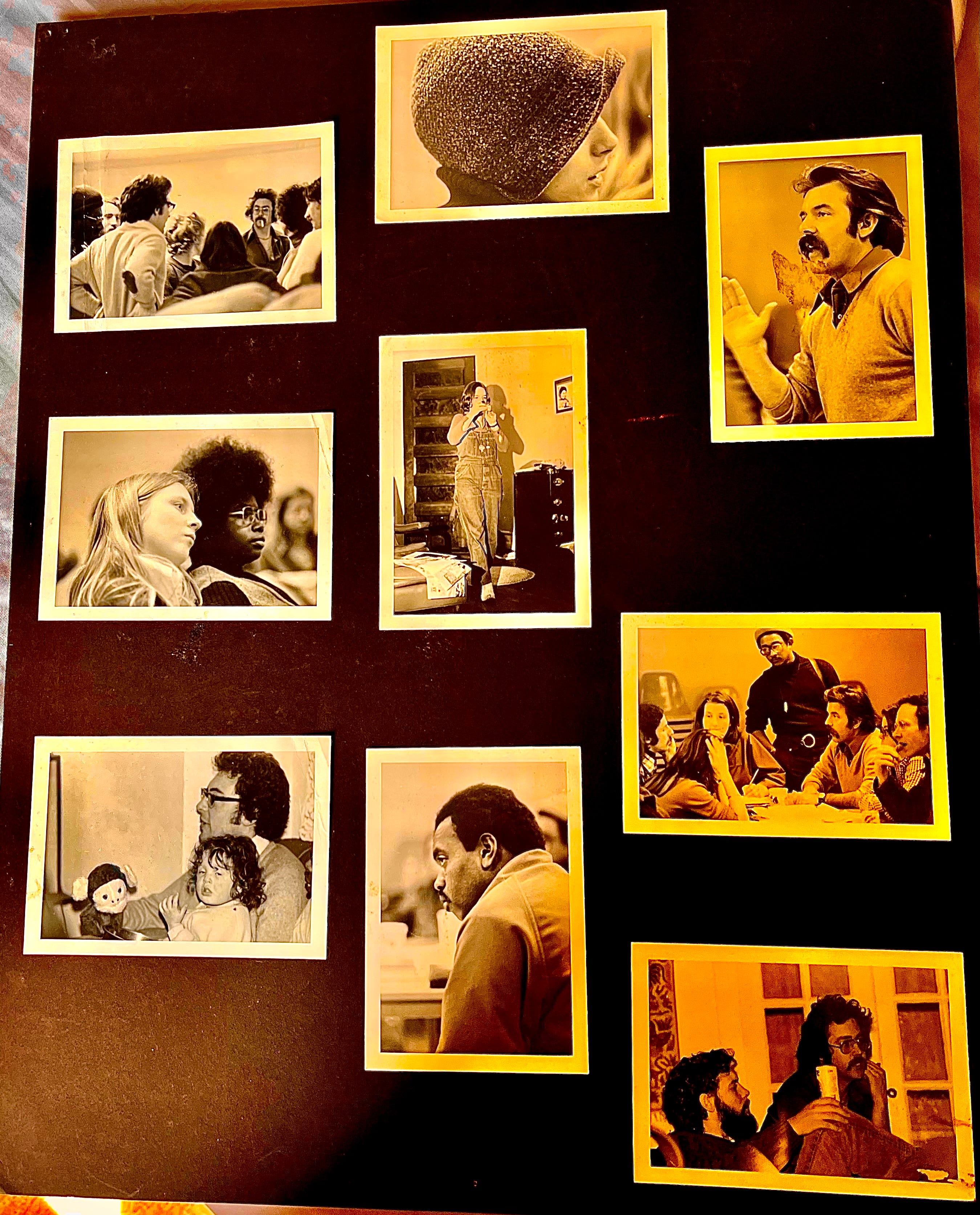
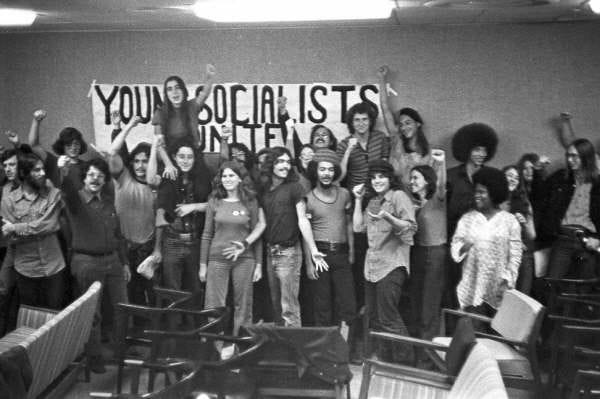
You see, The Red Tide started out as a radical high school newspaper in Los Angeles, in 19701– all kinds of writers/activists, all teenagers. Some were Yippies, some were Marxists, lesbian separatists, Black Student Union founders, everything.
Then, as the War ended, a significant part of the RT joined/merged with the IS. “The Grown-Ups.”
That really is how I thought of them. A little suspicious, a little admiring.
I was 15 when I joined the Red Tide. I was instantly attracted to a group of very young smarty-pants who were talking about revolution and history and seizing state power. They were miles ahead of what was being talked about in my high school history class.
My first presentation to our Red Tide study group, written in longhand, was on “Dual Power” between Mensheviks and Bolsheviks as described by Isaac Deutscher.
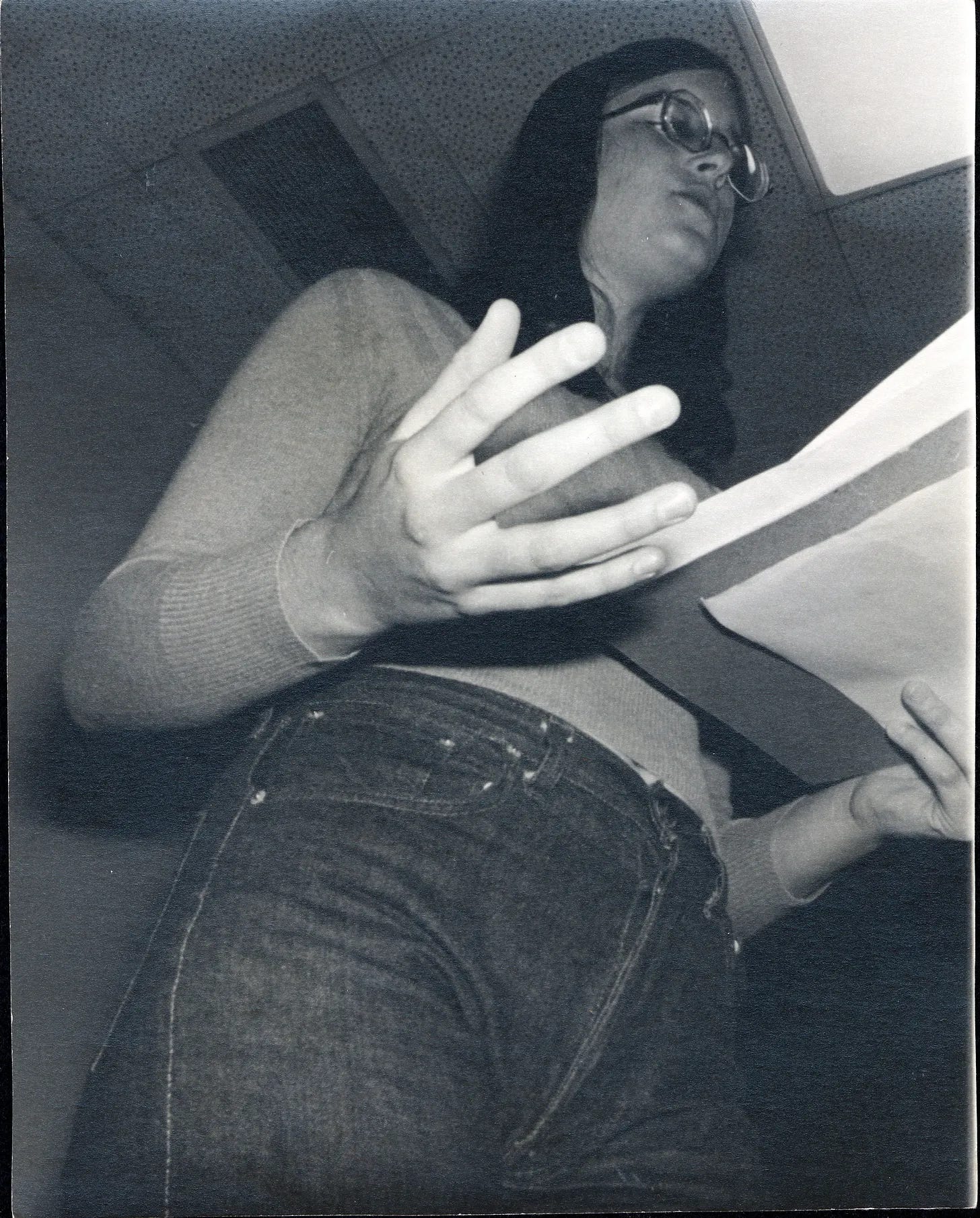
Following such study sessions, we picketed local liquor stores to support the UFW Boycott and get Gallo wine off the shelves of LA grocery stores. Company goons occasionally beat us up.
We excoriated our textbooks at our high schools and founded classes on US Black History. Women’s history. We turned a janitor’s closet into a birth control and abortion information center. We brought Jeanne Cordova from The Lesbian Tide to speak on campus, and Jane Fonda, fresh off the plane from Hanoi. We sued the school district for the first amendment rights of high school students and we won.
When the LAPD installed undercover narcs to pose as students “scoring grass” on our campus, we sparked a walk-out across five city public schools and turned over a cop car or two.
This was not easy. You must imagine a lot of pandemonium and frustration between the highlights. We were not being controlled by some parent-specter-groomer. It really was “just us.” I learned how to organize, i.e., talk to strangers, and I learned how to produce a newspaper, from scratch.
Eventually the Los Angeles Red Tide hooked up with another high school student group in the Bay Area, who shared our vibe and determination. (Described in Higgins’ book by Larry Bradshaw.) Some of us would eventually move to Detroit, Michigan, where high school students would greet me outside their campus, saying, “But why did you come here? Everyone here is trying to get to Cali!”
We started a RT chapter in Detroit, and we bonded hard, fighting for political prisoner Gary Tyler’s innocence, and doing citywide anti-apartheid teach-in’s.
The short story is, these friends/comrades I made during those years are my oldest and fiercest. We went through so much together — changing the world before our eyes. We saw what a small group of people could do. We also took our lumps from the state: in jail, targeted by police, labor bosses, the KKK, the Nazi Party, getting our asses kicked —feeling very isolated at times.
Then, there was an aftermath.
I have been an unaffiliated socialist since the I.S. expelled me in 1977. There was a lot of that, throwing people out in spasms of organizational ire. I wasn’t alone!
Still, what that word means in my heart—“socialist”— comes from the comrades I found when I was still in high school. My best friends.
I know you’re waiting for a BUT.
I am reluctant to give you my BUT. Let’s unspool this a little more.
My history is not in Andrew Higgins’ collection— I wrote a memoir about my years in the IS, long ago.1
I did consult with Andrew, and offered him my introductions, and editorial caveats. I gave notes to a couple of the contributors, like my friends Michael Letwin and Kim Anno. Their experiences are the most like mine.
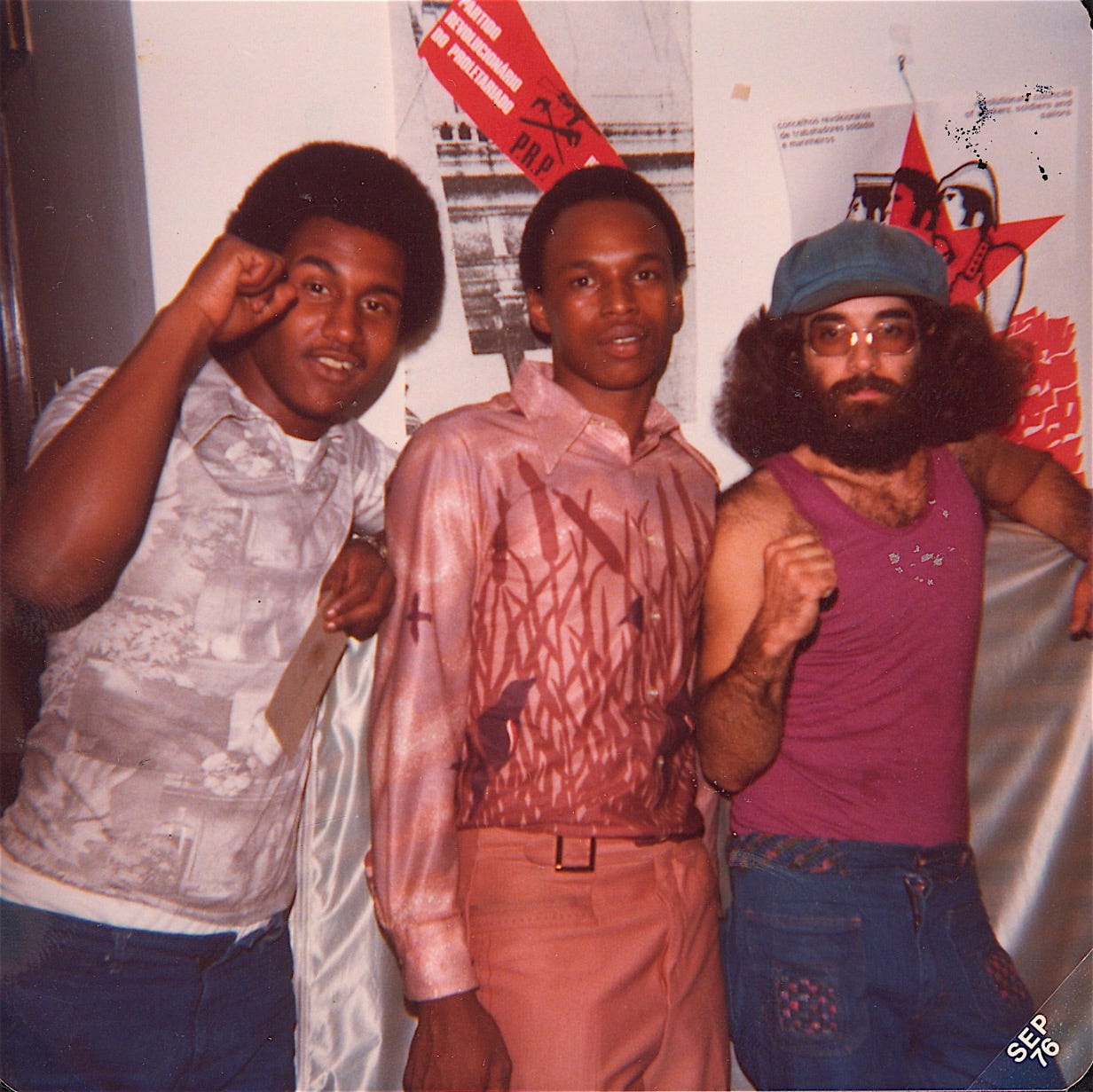
Some of my favorite chapters are from my friends in Detroit— Kyle Hopkins, Tonya English, and Arnita Dobbins, who grew up in the city’s Black Power era at its zenith, when your stake in your political future, your family — everything seemed possible.
We were so lucky to meet each other that young, to trust each other a little. It was a huge leap.
I said the editor, “Andrew, I doubt you’d want my writing in this, because it’s too frank, sexually, for your purposes— and you know, a side of tragic.” —A little of the cautionary tale.
I am speaking from the uncomfortable-truth department, and it doesn’t make me look great, either.
Why has it taken so long for IS and RT folks to speak out? The adventures, triumphs, and heartbreaking twists of fate are remarkable. We did change the American politic.
I think . . . It’s because there is a lot of pain left in the wake of the IS splinter and demise. You could say the seeds of destruction were baked in, long ago.
The American Left, coming into the sixties, was devastated by McCarthyism fears, exile, sins of the father. That’s what the IS was born into, like all of the New Left during the Vietnam years.
American socialists in those days, were instructed by their mentors from Day 1, not to tell anyone anything, to keep our names secret, to remove traces of one’s past, to put everyone on a “need to know” basis. “Domestic matters” were not supposed to matter.
We never admitted problems or aired dirty laundry. How could we? The FBI had their sights on us. We were monitored by the COINTELPRO programs, we were infiltrated by creeps we only found out about, years later. Everything you’ve read about what happened when J. Edgar Hoover devastated the Panthers, we were well acquainted with. Smaller scale, same ugly impact.
We didn’t “win,” after all. No democratic socialism in my lifetime. So much for triumphalism and five-year plans, seven-year plans. Anyone from that era who’s still in politics now, has become zen-like. You burn through your attachments.
The more sensitive issues are the things we did to ourselves— those are the hardest to sleep on. The internecine battles between former loving comrades— the stuff of drama.
It has taken decades to open my mouth and say, “Okay. I’m ready to say what happened.”
One has to begin with the “good part.” Not to be an apologist, but to understand the stakes.
Higgins’ oral histories show how a cadre in the labor movement and community struggles held their spine and even slayed a couple dragons during the psychotically conservative Reagan years. It was a mouse that roared. We “did good” like Robin Hood.
If you’re young and curious about the organizing campaigns of contemporary socialists like AOC, or Mamdani, or how the rank and file trade union movement changed from a bunch of old Nixon-lapping fogeys to progressives of today— there’s a lot of the IS spirit in those movements. Foundational.
The Red Tide and the IS did create some moments intimate solidarity between “black and white” at a time of profound segregation; we physically resisted the Klan and the Nazi’s, the carceral system, the corrupt-cozy hell between union and company bosses.
On the theoretical side, the IS was on the money for two precedents.
They were the first socialist tendency to “Say No to Moscow AND Washington” — a Marxist group untethered to Capital-C communist oligarchies in USSR, China, and Cuba.
At the time, in the 60s and 70s, such a position was WILD. There were so many American lefty illusions about Mao, Fidel, and the rest.
We never had to go on apology tour.
The other tradition that came out of the IS in particular, was systematic, from-the bottom-up community, street by street, shop by shop, organizing. It owes much in debt to Farrell Dobbs and the earliest American socialist days, long before Bolsheviks. When you see how Minneapolis resisted ICE, you are seeing some of that legacy.
So too, as you observe campaigns like Mamdani’s in New York, or the Black Panthers in the early days, you are looking at a particular kind of shoe leather that gets worn out organizing on the ground.
You identify grassroots charisma, form common cause, and keep pushing from below.
It’s the opposite of investing in magical leaders and political hubris. The hours involved are endless. It sounds noble, but it’s strategic. You want to be able to withstand being picked off.
Because you will get picked off.

So why did it all end? What broke up the band?
You don’t learn that answer from Higgins’ book— or rather, it’s obscure. You hear fragments.
I was startled reading some of my old friends’ accounts of “why we broke up” — like a divorce where you’re the stunned kid who never understood what the hell was going on.
There is a spoken reason for this disconnect, and an unspoken one.
The stated fatal argument was, “Whither American Labor?” How were we supposed to navigate the Reagan years when unions were being eviserated? —Or as one comrade put it, “death by a thousand cuts.”
The IS had, let’s be frank, shocking success building a rank and file movement in the Teamsters that ended up toppling the old-boy leadership, and prompted the first national general strike among over-the-road drivers. We could hardly believe it when we found we had a tiger by the tail. The timing was right.
I was in the middle of the earliest days of TDU, when it was just a handful of us in a room, running the mimeograph machine. I typed and edited the founding documents. I drove cross-country organizing in truck stops, driver by driver. Loading dock by loading dock. Having guns drawn on me by opposing sides, staying up late at night strategizing, planning a next day. Crafting the kind of union we wanted. The membership swelled to thousands. People were READY.
So— one thing happening in the freight industry at the time, was that United Parcel Service, UPS, was coming into its ascendancy. They would change the business entirely, but we didn’t know that yet. UPS hired a lot of young people, Gen-X’ers. They changed protocols. They had their own language. They hired women. (Women who would become extraordinary union leaders, to their dismay).
Yeah, and you didn’t have to be white to be hired, either. Ha! This was really different for the trucking industry, and for the Teamsters Union.
UPS was not benevolent— they exploited the generation gap and race and gender gap, which they’ve continued to this day.
In TDU, and consequently the IS, there was an argument about whether we needed to emphasize the older veterans of the union, the gray-hairs, so to speak, versus the younger generation coming in. Women rising up. It was not a polite set of differences.
As an example, 1976, I was arrested on a UPS picket line with my comrades in Detroit, roughed up and thrown in a cell. I was 17.
When I got my one phone call from jail, I called not my family, but the IS national office. Older comrade Mike Parker answered the phone, and when I told him where I was— Can you get someone to bail me out? — he lost his temper.
“Sue, you’ve been told a hundred times. UPS is not a priority.”
And then he hung up on me.
And that’s what you call a difference of opinion.
This happened all over the Left, not just the IS. Members never talked about our own class origins and differences inside our groups, but it was tense. I didn’t like being lectured by people from backgrounds different from my own about what “a real worker” was.
There were purity tests. The Right Kind of Worker. The Right Kind of Internationalist. The Right Kind of Ally.
One afternoon, years later, I talked to Elaine Brown from the Black Panthers about the same bullshit in her era, (“The Right Kind of Black” category—you can imagine) and we started crying with laughter. Catharsis.
In retrospect, it was the internal power struggles of the over-matched, and it’s been repeated a million times. Crabs in a bucket.
So yes, there were disagreements about the group’s approach to labor, or how to live through a rather reactionary period where it was clear the Left and Labor were on the defensive. You would think we could overcome the differences, small as we were.
But no.
The fatal ingredient, was our lack of self-examination. The abuse of corrupt leadership. It was rotten. The dick-swinging made self-examination impossible.
So let’s rip off the bandaid. What finally broke up the IS tendency in the 21st century, both in the U.S. and the U.K memberships, was a cascade of events prompted by “a charismatic man”— reckless, narcissistic, drunk, and indulged— who sexually assaulted a comrade, a woman. More than one. More than once.
A consistent pattern, as they say.
And, instead of nipping the perp’s bullshit in the bud, and packing his bags, leaders close to the scoundrel closed ranks, made excuses, covered it up. They disparaged the complaining women.
Stop me if you’ve heard this one before. Google your heart out.
The final dissolution happened around 2019, forty-two years after I was expelled. The trust was broken.
Toxic characters like these men have shambled their way through social movements for as long as we can remember. What different now is that finally, finally, a group of women and men said, ENOUGH.
I can’t believe the Chavez exposé has come right in time for this moment. Because it is endemic.
The IS was one domino in the history of organizations who preached one thing, and did another at their peril. There we were, ardent feminists, openly gay members in the 70s, people devoted to unmasking and repudiating racism wherever it raised its head.
And Yet.
By sweeping the ugly under the rug, you end up with a monster under the bed.
I was one of the young sweepers, the excusers, the insecure, the dupes, the exploited — until I wasn’t. I remember thinking that it was kind of weird I was asked to bed the National Secretary when he came to Los Angeles, like it was an assignment. He needs a young woman in every port! I thought he was an asshole. He was cruel. Was he supposed to be some kind of genius in spite of it?
Well, that turned out not to be true. He was not a genius; he was a con artist.
By the time I was 18 in Detroit in 1976, I’d surmised that if you were in our group and didn’t have a powerful “husband/protector,” then the only other avenue was to become an Iron Nun. There was nothing in between.
But there were bigger fish to fry, right? Weren’t we aiming for revolution? Why would I want to complain over a personal hassle, a pathetic misogynist stunt? I pushed it out of my mind and went to a lesbianfeminist CR meeting. Then organize another demo. Then print the next issue of our paper. Stay up all night until everything was done. There was more to do. I couldn’t synthesize the contradictions, only the imperatives that lay in front of us.
Marx was read, Lenin studied, but honestly, Freud and Shulamith Firestone could have offered some insights.
We did not discuss members’ mental health when it was failing. We looked past outrageous drug and alcohol problems, ones that probably mirrored those of our own parents.
We tolerated and esteemed and excused men in leadership who were beating their lovers. And their wives who excused it. —Violent drunken pricks who were supposed to be in charge.
Or we didn’t. I slapped one of those bastards in the face at a meeting and you can guess which of us got in trouble.
It was disgraceful. Blood was spilled, literally. And the chickens came home to roost.
How does one answer collective PTSD? It was never addressed, not even remotely.
I am haunted by all the things that “didn’t happen.”
This is one story.
One time after the Red Tide had organized a high school teach-in about South African apartheid, an inspiring day, I invited everyone over to my flat I shared with an older (27!) comrade who was at work. I would make spaghetti for everyone.
We were so tired that instead of spinning records, dancing, and carrying on, everyone was lying on the sofas waiting to eat. There were about 20 of us, including some ninth graders from Chicago who told their parents they were at a YMCA conference.
Then came the knock, or rather a series of hard blows on the door and everyone knew it wasn’t friendly. I cracked open the door and it was five of Detroit’s finest, batons at the ready while I sputtered out, “Don’t you need a search warrant? “—The lead thug pushed his way in, twisted my arm around in a half Nelson, and drew his gun to my temple.
They had that look the ICE agents have today. —Where they are both furious and embarrassed with themselves, which was only gonna be taken out on us. One of them claimed we were harboring a kidnapped officer, which was ridiculous. I got the impression a racist neighbor had tattled on us and reported a house full of black and white young people no doubt having an orgy.
They pushed me gun-first through the house, threatening everyone with the same fate. One of the older RT’er in the room made oinking noises, goading the cops on, which only made things worse.
Yeah, he turned out to be one of my comrade wife-beaters and pimps. Good times.
I really don’t know why the thug team gave up, but a headquarters message was crackling in the ears of the cop’s walkie-talkies, and the chief pig dropped my arm, spinning me, and threw me to the floor— You’re evicted; get out.
All I could think about was those little girls from Chicago scared shitless. And the look I imagined on my roommate’s face when she came home and saw the mess they made. Losing her apartment because of me.
Everyone fled like rabbits; it seemed like in one minute the cops were gone and everyone else disappeared— I was standing alone with a bunch of congealed pasta.
The silence I remember in that moment was a ringing in my ears. I didn’t sit. I remember, staring out the window as if waiting for the next shatter.
It came, with the arrival of two men from the IS leadership, Joel and Eric. One of them had been my lover the year before. Now disavowed.
The two men stepped in the open door— it had been broken. They surveyed the dismal scene.
Joel said, “Is this it? “ And then, “Well, clean it up.”
And that was it.
So many times, this scenario. This is on you. Toughen up. Say Nothing. Familiar messages in my family of origin, too.
As the decades went by, I began to wonder if anyone remembered what I did.
And then, five years ago, I went back to Detroit for a Red Tide reunion, and I saw Billy, now 60-something like me, one of the locals who’d been in Highland Park that day. I hadn’t seen him since we were 17.
We were drinking Vernor’s sodas and hanging around the grill outside at Tonya’s. Perfect summer day. Billy came running up to me with his wife who I’d never met, and he just folded me into his arms and kept exclaiming to his missus, “It’s Sue, it Sue, they held a gun to her head. She’s the one I told you, they held a gun to her head.”
What happened to those who left or drifted away from the IS? The paths are quite various. The folks you’ll see Higgins’ edition are people like myself who remained in the political life. Some are venerated in the Labor Movement. I’m friends with some. A few to confide to. Others, a respect for that fact we’re still here.
A lot of us had families and raised children and grandchildren and adopted children. We made neighborhood communities. We worked and worked and worked at all the jobs America offers. Making things. Taking care of people.
Quite a number of us became artists, that’s interesting to me.
I have comrades and ex’es who became inventors, and leaders in the beginning of the tech revolution.
I have others who joined Eastern-inspired religious groups, or became rabbis. Sects that made the IS look like a casual drop-in club.
And other comrades, because we were adept at publishing our own house organs, we got involved in journalism, book and media publishing.
When you were in the IS, you had to know how to write copy, capture the photo, lay it out, print it, and then market the hell out of it. We called that last part, “agitprop.” I have never had a better training ground, although ironically, no one at the time ever said, “Huh, you’re good at this.”
I thought we all had to be good at it. I thought you had to be able to debate the world and win.
So back to my book review — if you’re a critic/student of American history and politics, yeah, you will be curious to read it. The quality of the writing is all over the map, but the good chapters are really good, and you’ll learn things you’d never find anywhere else. Think of it as a primary document, the beginning of a trail.
Does it have major holes? Yes. I think we’re at the beginning of the “Can-we-talk-about-what-really-happened” phase. It’s ironic that it comes at the end of the founders’ generation.
So many young people are saying today, “Enough of you, and your excuses. We’ve run out of time.”
I can’t help but agree with them. I wish I had been that ferocious at the time. I thought I was. I thought I was.
I’ve published the I.S. andRed Tide chapters here: The Bunny Trip, The George Putnam Show, You Are Now a Cadre, Patty Hearst, Montijo’s Apartment, The Aorta, Relocation, The Perfume Counter, Expulsion.
I have so many postscripts to this piece. Too many. Well, here’s one: Yes, I did speak face to face with folks here that I spoke of, individually. Sometimes many years later.
Like, “Why did you do that?” kind of conversations.
It’s not because I’m so brave or calculated, I’m just the kind of person who can’t be with you in a room when there’s an elephant there, too. I burst out.
What I found is that, most of these guys say don’t remember. Like flat out, “Oh no, that never happened” kind of memory holes. It doesn’t fit their story of themselves.
One of the men sent me a Western Union telegram a year after our last sighting, saying, “Men are shit. You’re a good kid. Have a nice life.”
Alrighty then!
Most excellent; this writing is an act of bravery